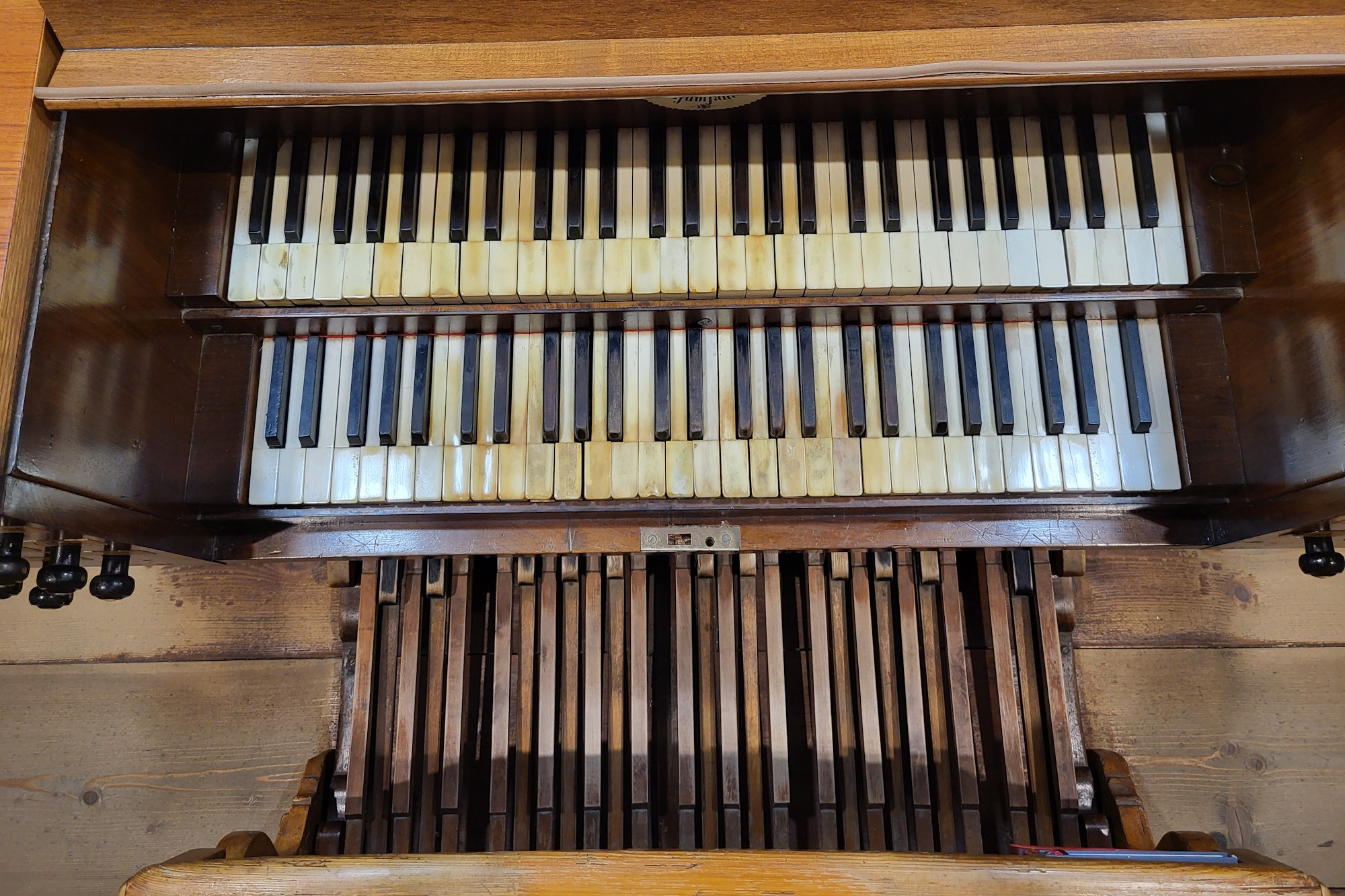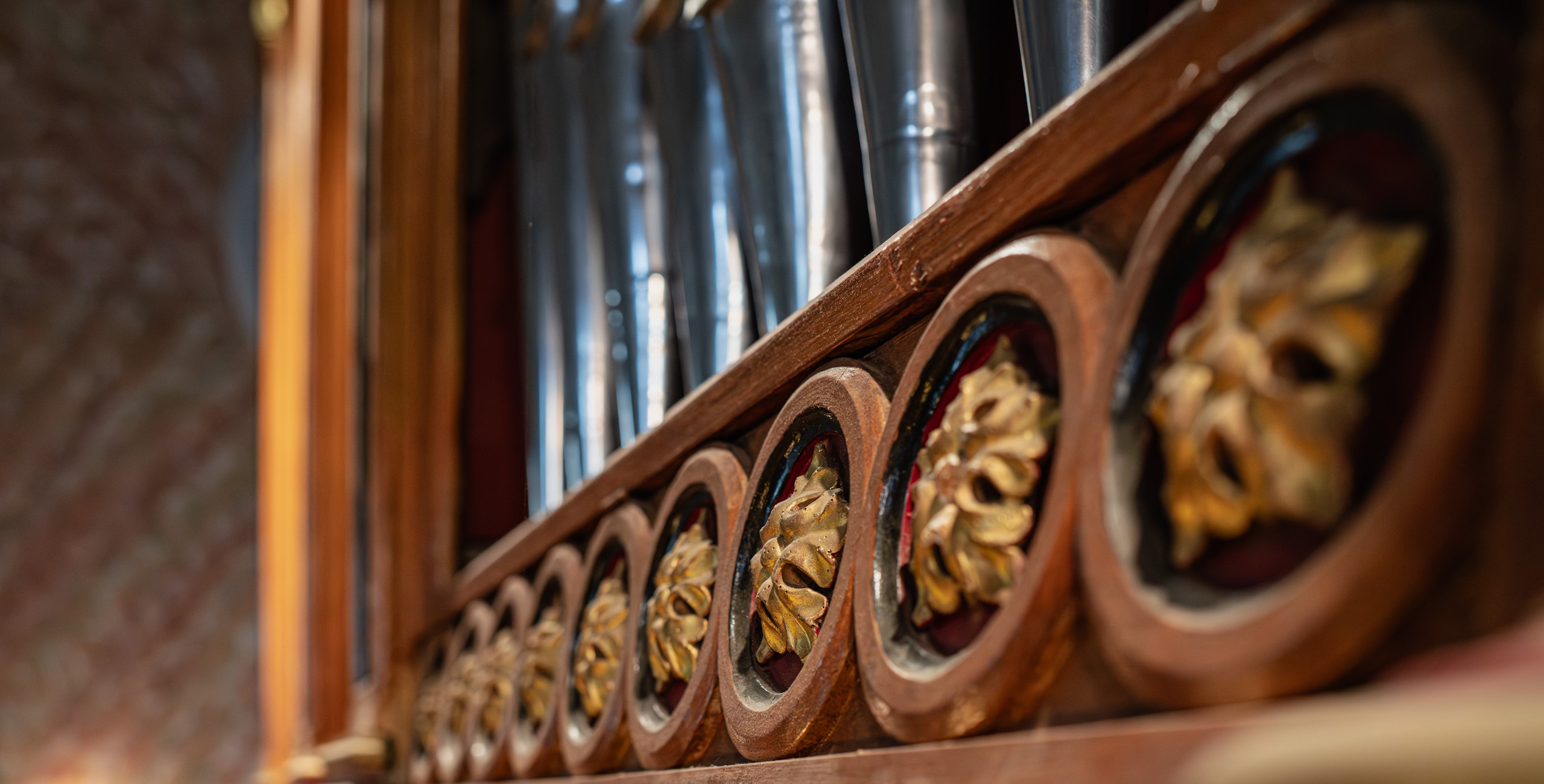
On October 19, 2024, the parish of Ribnica celebrated the 150th anniversary of the Goršič organ (Op. 19, 1874), which is installed in the parish church of St. Stephen. This organ is the largest original creation by Goršič, entirely made in his workshop.
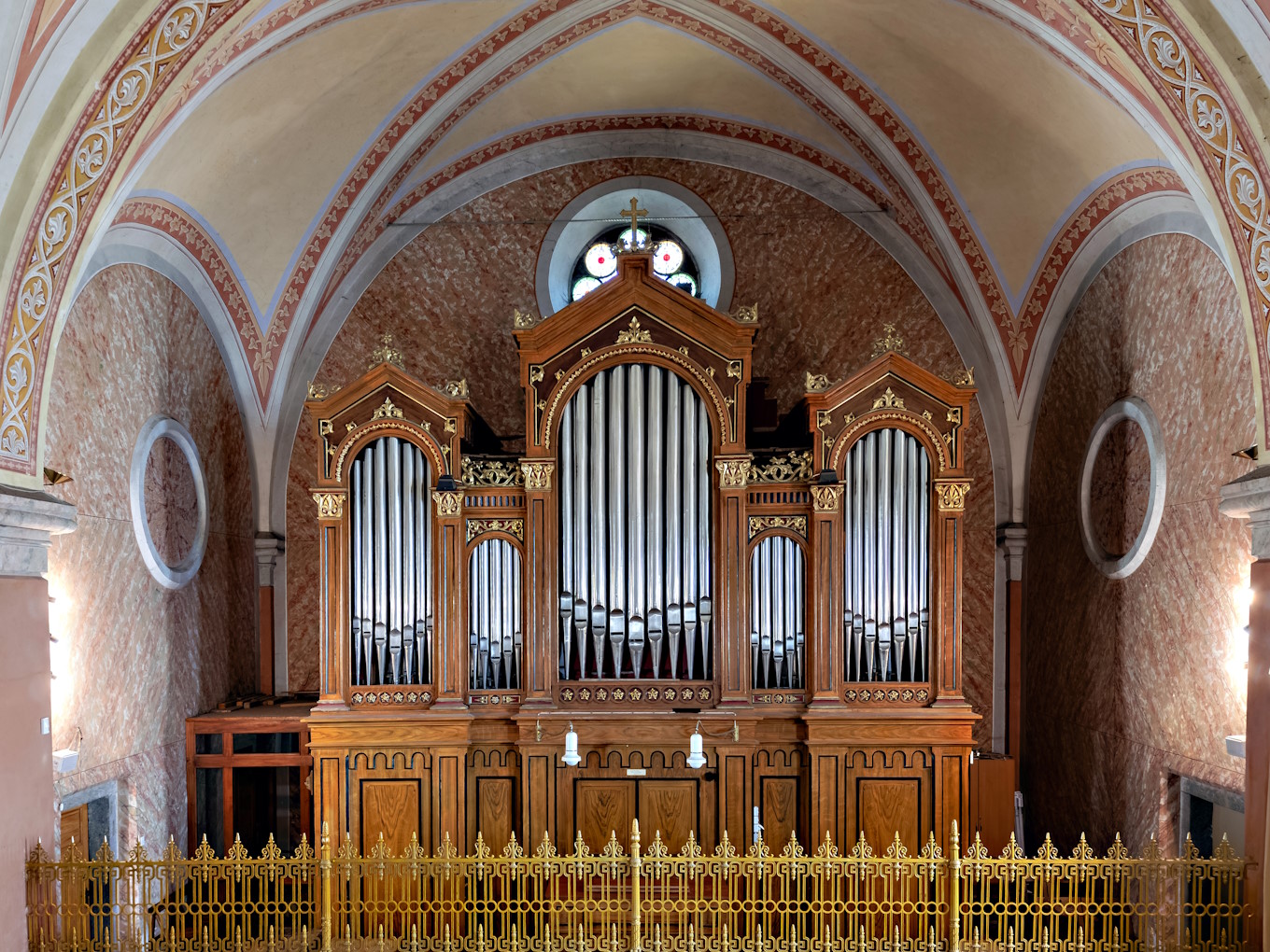
Photo: Daniel Vincek
Organistica participated in the anniversary celebrations by presenting a lecture on the master Franc Goršič covering his life and work, the history of the organ in the parish of Ribnica, as well as the features and specifics of the existing Goršič organ.
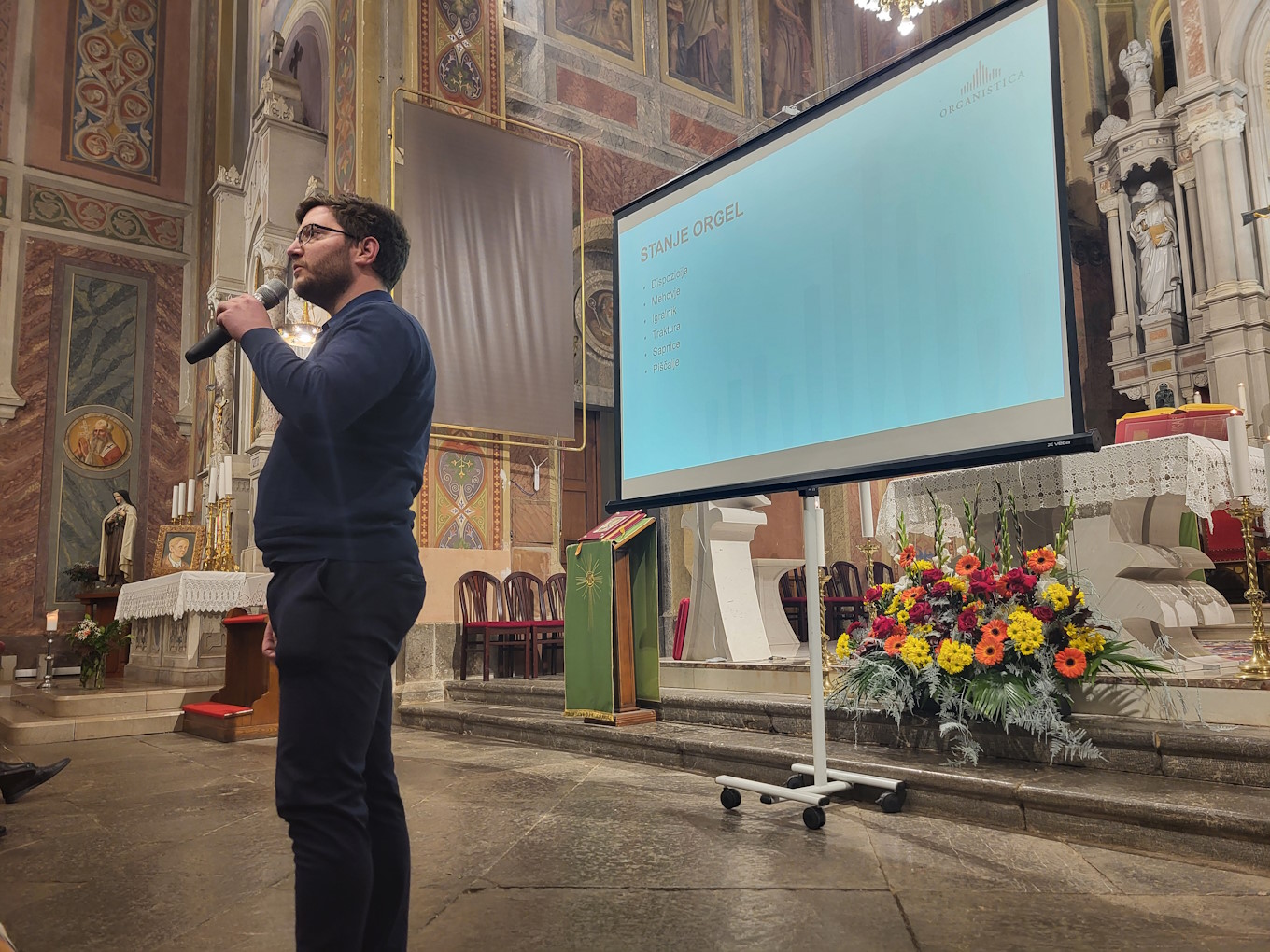
Photo: Organistica
History of the organ in Ribnica
The organ in the old church in Ribnica was built between 1758 and 1760 by the renowned organ builder Franc Ksaver Križman. It is believed that he studied organ construction under Peter Nakić in Venice. The parish priest of Ribnica at that time, Janez Jakob Bajec, commissioned the creation of this organ. Historical records indicate that there was an organ in the church prior to Križman’s work, which was replaced by the new organ. This information is supported by Anton Skubic, the Dean of Ribnica, in his publication “The history of Ribnica and the Ribnica region”.
It is established that Križman’s organ was completed in 1760. This information comes from a letter of recommendation issued by Bajec on 26 October 1761. In the letter, Bajec recommends Križman to all church superiors as a learned and dedicated priest as well as a skilled organ builder. He notes that a year earlier, Križman had installed a new organ for him and praises its lovely yet bold voice, the wonderful variety of registers, and the steadiness of the instrument. All listeners and musicians who tried the organ were astonished by its quality. The master builder employed a new type of mechanics, making the organ easier to play, with a softer voice and stronger resonance. The pipes mimic almost all musical instruments and even the human voice.
Dean Anton Skubic
A letter of recommendation from Janez Jakob Bajc helped Križman secure a commission for a new organ in the Ljubljana cathedral. However, Križman’s organ in Ribnica did not sing for long. In 1775, it was destroyed in a fire that engulfed the church. Archdeacon Janez Krstnik Kobal, the successor of Jakob Bajec, soon arranged for a new organ, commissioning it from Anton Scholz, a Celje organ builder and successor to the famous Janeček workshop. Scholz installed the new organ in Ribnica in 1782, and it became a typical example of Slovenian late Baroque style.
As the Ribnica church became too small, it was demolished, and a new church was constructed in 1873, which still stands today. The Scholz organ continued to be used in the choir of the new church until 1874, when it was sold to the Holy Trinity branch church in Hrovača, where it still stands today.
In 1874, the Scholz organ was replaced by the current organ, which is the 19th work of the Ljubljana organ builder France Goršič. With 26 registers, this organ is the largest surviving mechanical instrument with slider chests built by Goršič.
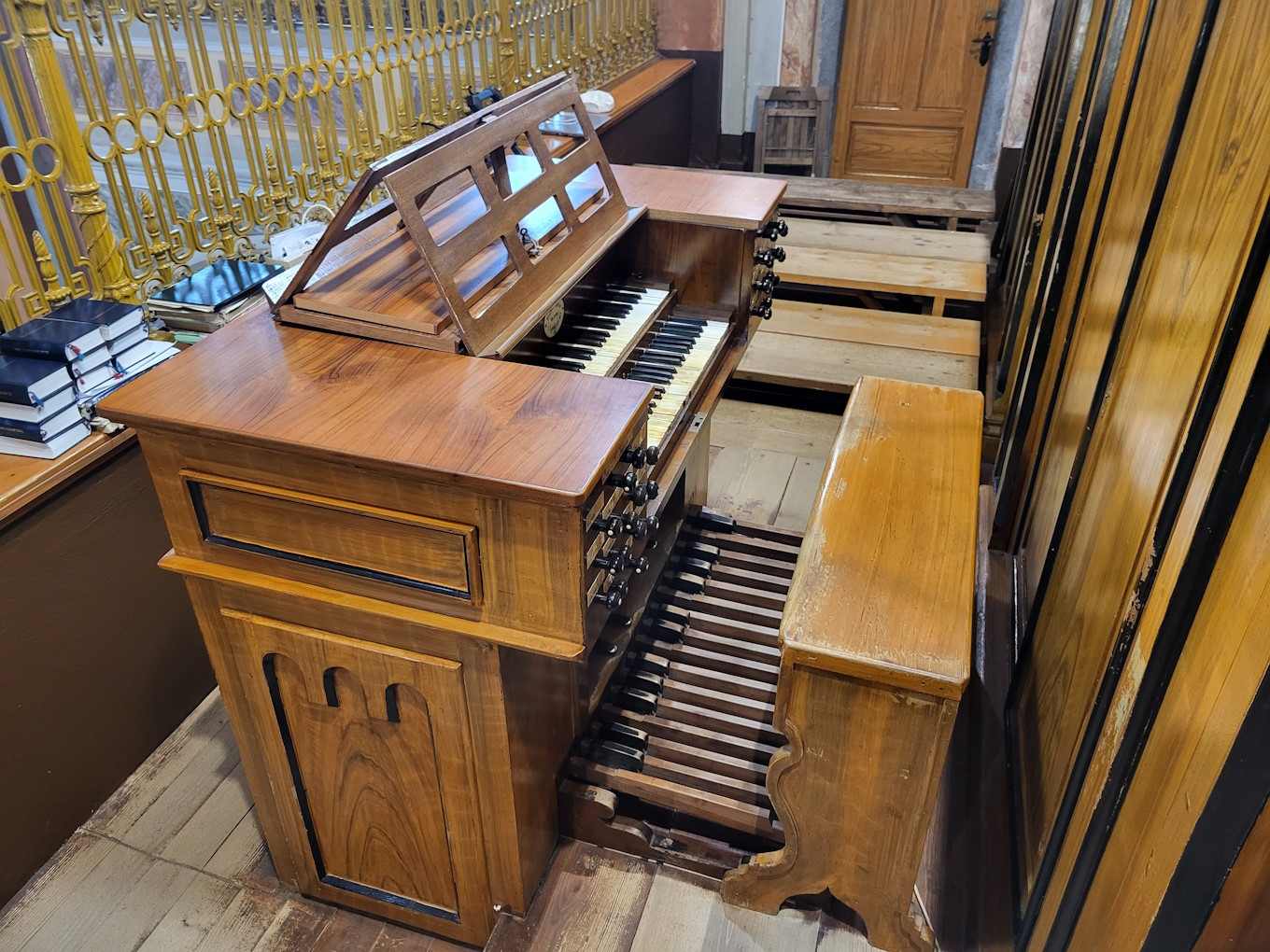
Photo: Organistica
The organ features manual and pedal couplers, along with a two free combinations. The manual keys range from C – g3, while the pedal keys extend from C – d1. The metal pipes are crafted from the finest tin, but many are also made from various types of wood, including pine, fir, beech, and oak. The prospectus pipes, which are of exceptional quality, were saved by Dean Anton Skubic during the First World War; otherwise, they, along with the bells and tin pipes, would have been requisitioned for war efforts. Today, the main double rise bellows are powered by a blower but can still be manually operated. The Ribnica organ is the largest mechanical organ in Slovenia from the 19th century and is one of the few from earlier centuries that has been preserved in its original state. This preservation gives it significant historical value.
Organ disposition >
Organ repairs
During this year’s documentation of the organ, an inscription on the windchest was accidentally discovered. It stated that the organ was repaired on November 26, 1912, by Alojs Kopač from Šentvid near Ljubljana.
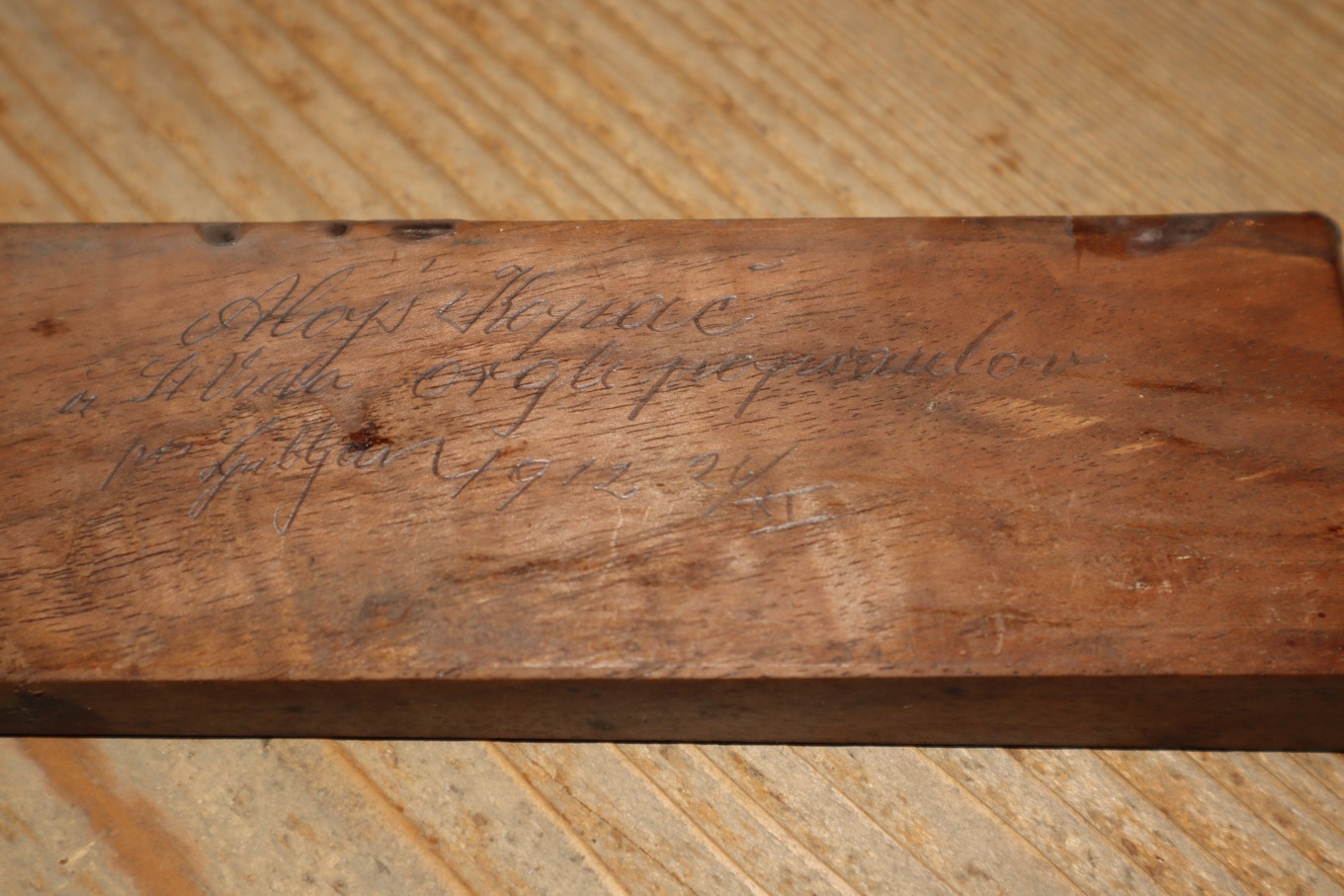
Photo: Organistica
After the Second World War, the organ suffered significant damage due to the passage of time. However, it wasn’t until 1987 that it was restored by the Ottitsch organ workshop in Carinthia, Austria. The restoration was blessed by Bishop Stanislav Lenič, who, in his address, remarked:
Just as the many pipes in the organ come together in one sound, so may the parishioners of Ribnica be united in mutual love and brotherhood!
Bishop Stanislav Lenič
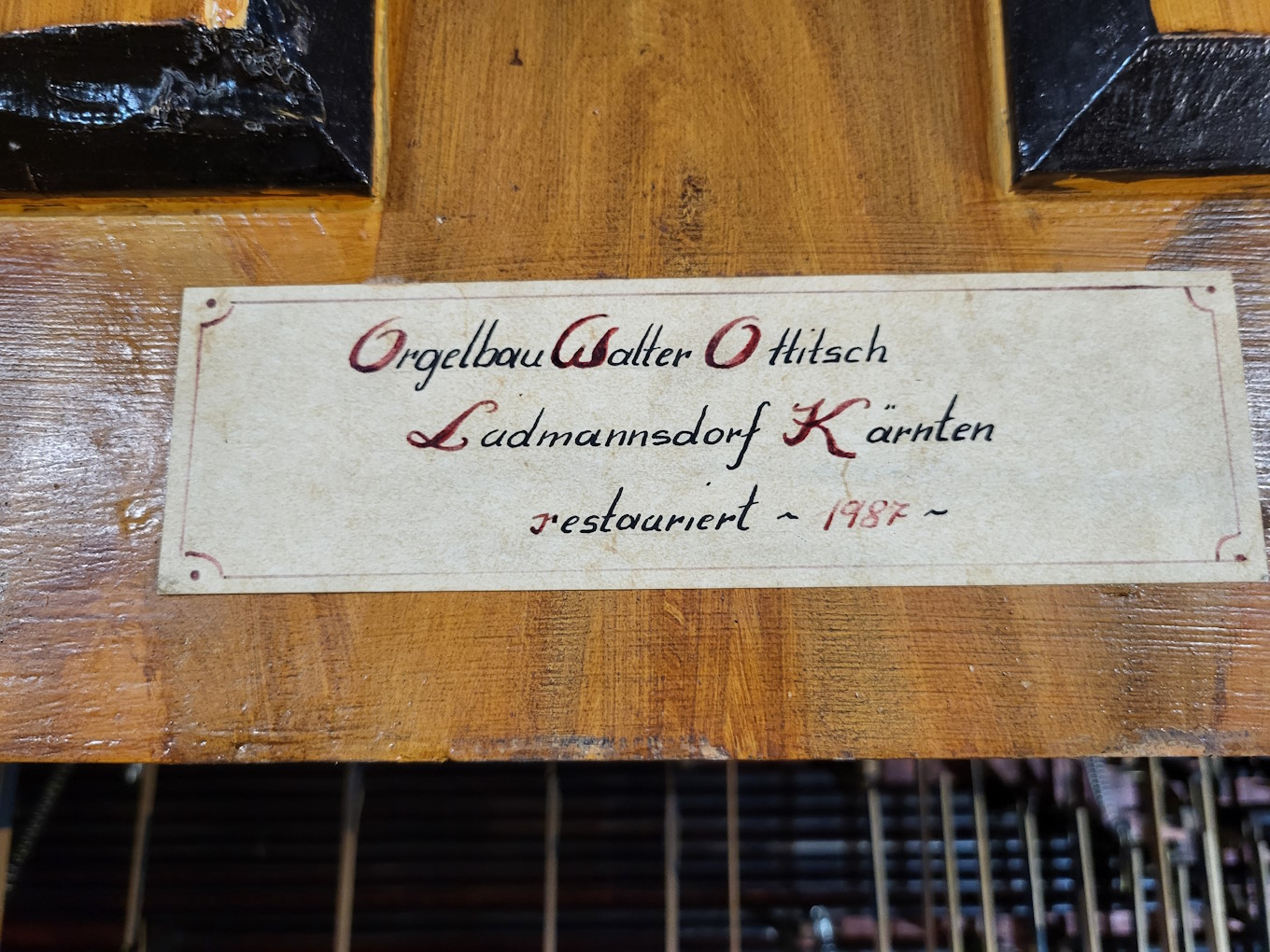
Photo: Organistica
Later, Goršič’s organ underwent two additional modifications after its initial restoration. In 1996, local organists replaced the seals on the windchests. Then, in 2018, in celebration of the 150th anniversary of the church’s consecration, the Maribor Organ Workshop restored the prospectus pipes.
Since the major restoration by the Ottitsch workshop forty years ago, the instrument’s condition has significantly deteriorated due to wood parasites, aging materials, and adverse climatic conditions. A thorough restoration is urgently needed to ensure that the instrument can continue to serve future generations.