The Ivan Milavec organ in Ljubljana Cathedral is one of the few preserved instruments from the Late Romantic period in Slovenia and the broader European region, making it an extremely important historical sound document. With 52 registers across three manuals and a pedal, it was built by Ivan Milavec in 1911. However, it has not undergone full and systematic maintenance since 1931, when master organ builder Franc Jenko (1894-1968) thoroughly cleaned, dusted, and tuned the instrument. After 90 years of only basic maintenance, a close inspection in the spring of 2021 revealed significant damage due to the passage of time and continuous use, rendering it unsuitable for modern use, particularly in liturgical and concert settings.
Condition and proposed restoration extent
An expert inspection of the organ has identified several issues, including technical obsolescence, sound imbalance, and various faults resulting from previous interventions. Consequently, the restoration must be comprehensive, involving both restoration and organ-building work. The goal is to preserve the instrument’s historical integrity, enhance its functionality, and ensure its enduring use in liturgical and concert activities.
Organ cases
For the restoration of the organ cases, it is essential to obtain the opinion of the Institute for the Protection of Cultural Heritage of Slovenia (IPCHS). Additionally, the opinions of the IPCHS, the organ restoration commission, and the selected organ builder must be coordinated before any interventions are made.
The following studies should also be considered while coordinating opinions and making decisions:
- Tehnična dokumentacija orgel v stolnici sv. Nikolaja v Ljubljani [Technical documentation of the organ in St. Nicholas Cathedral in Ljubljana] (Ivan Milavec, Op. 26, 1911), Luka Posavec, Aleš Razpotnik, Ljubljana, November 2024.
- Ohranjenost in predelave prvotnih Janečkovih orgel v ljubljanski stolnici sv. Nikolaja [Preservation and modifications of the cases of the original Janeček organ in St. Nicholas Cathedral in Ljubljana], Dr. Boštjan Roškar, Ptuj-Ormož Regional Museum, Department of Conservation-Restoration, No. 97 – 2023, 11 September 2023.
An inspection of the condition of the organ cases reveals that they require thorough cleaning and proper restoration, both inside and out. The findings are as follows:
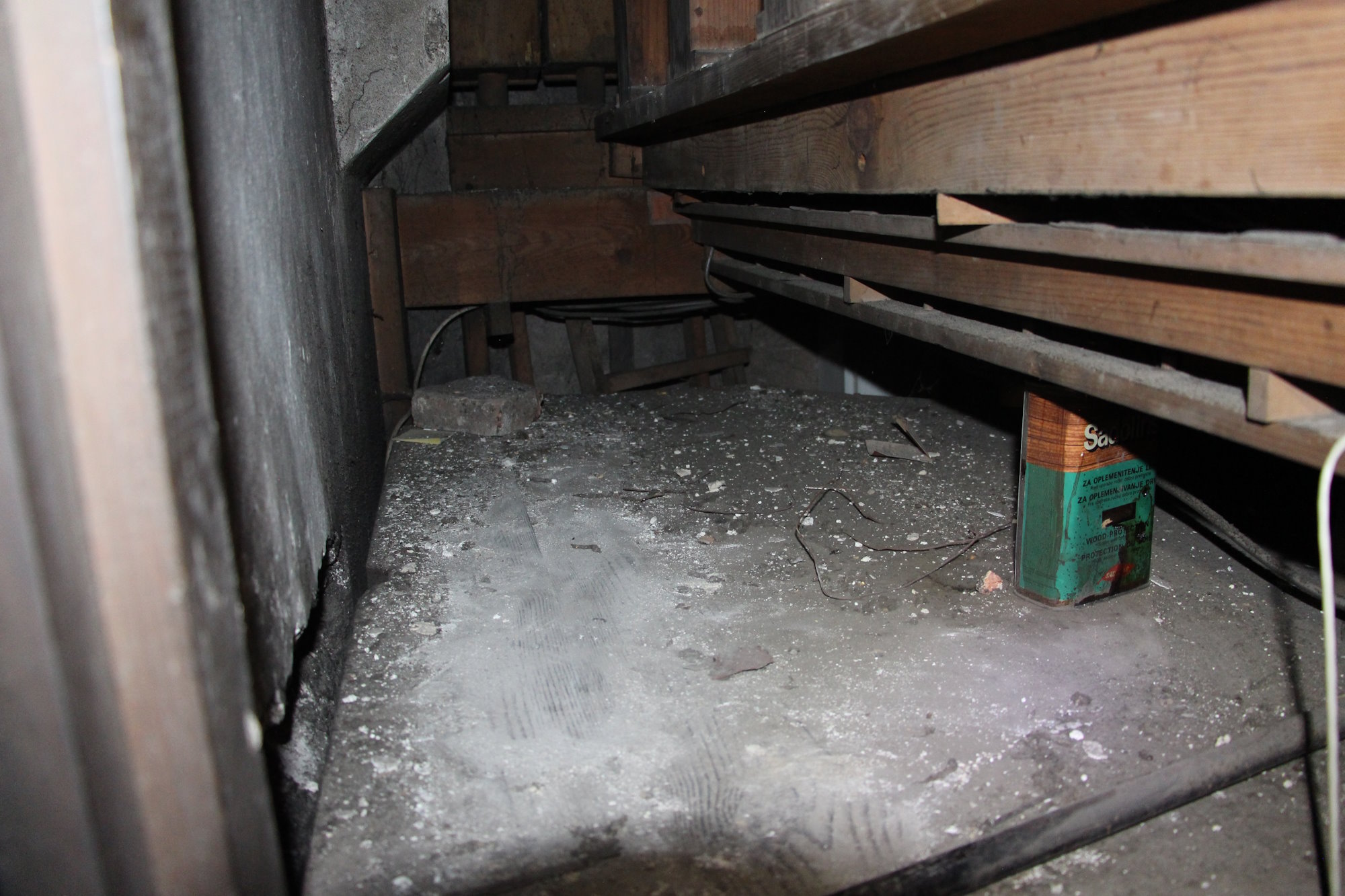
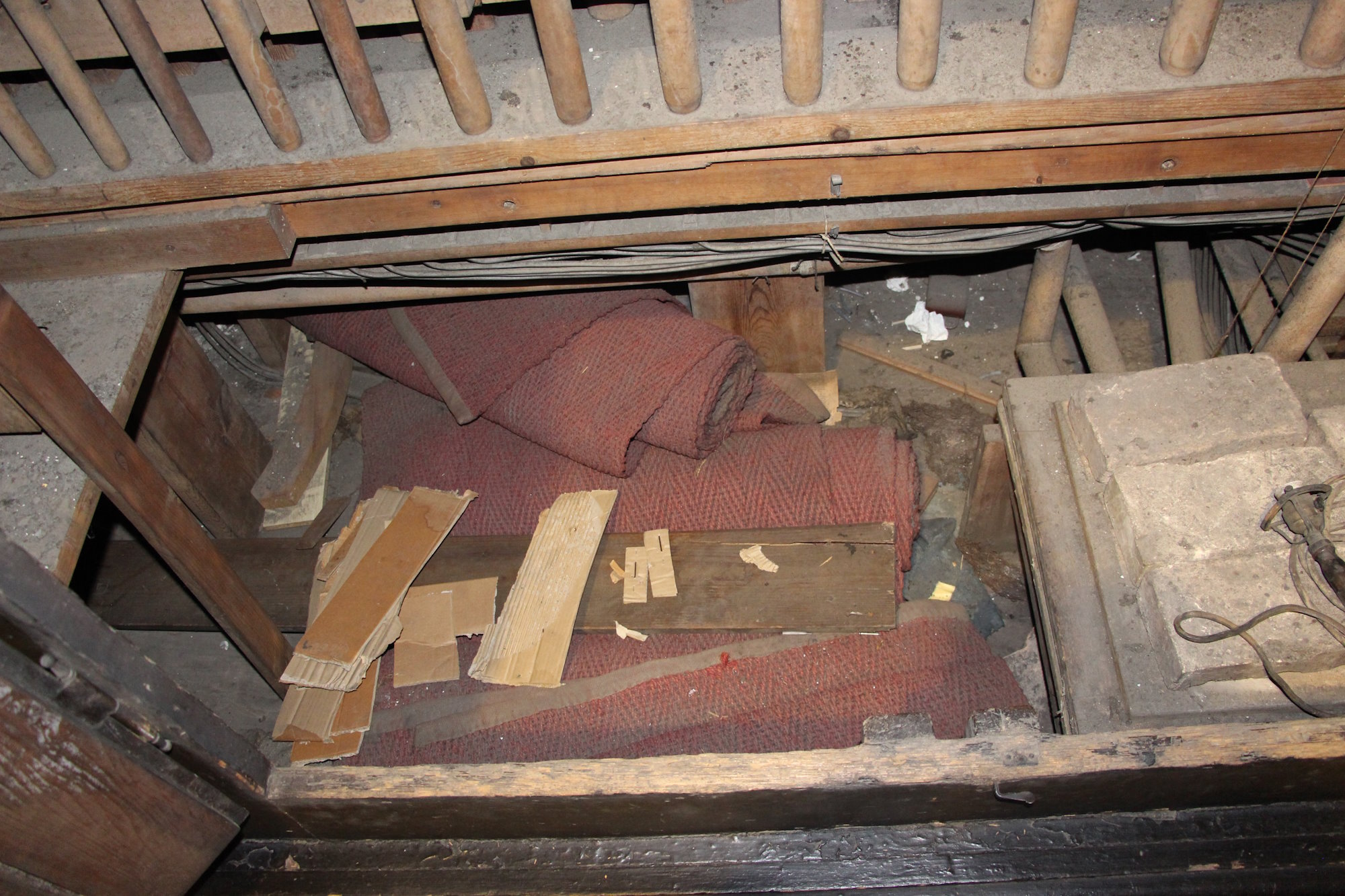
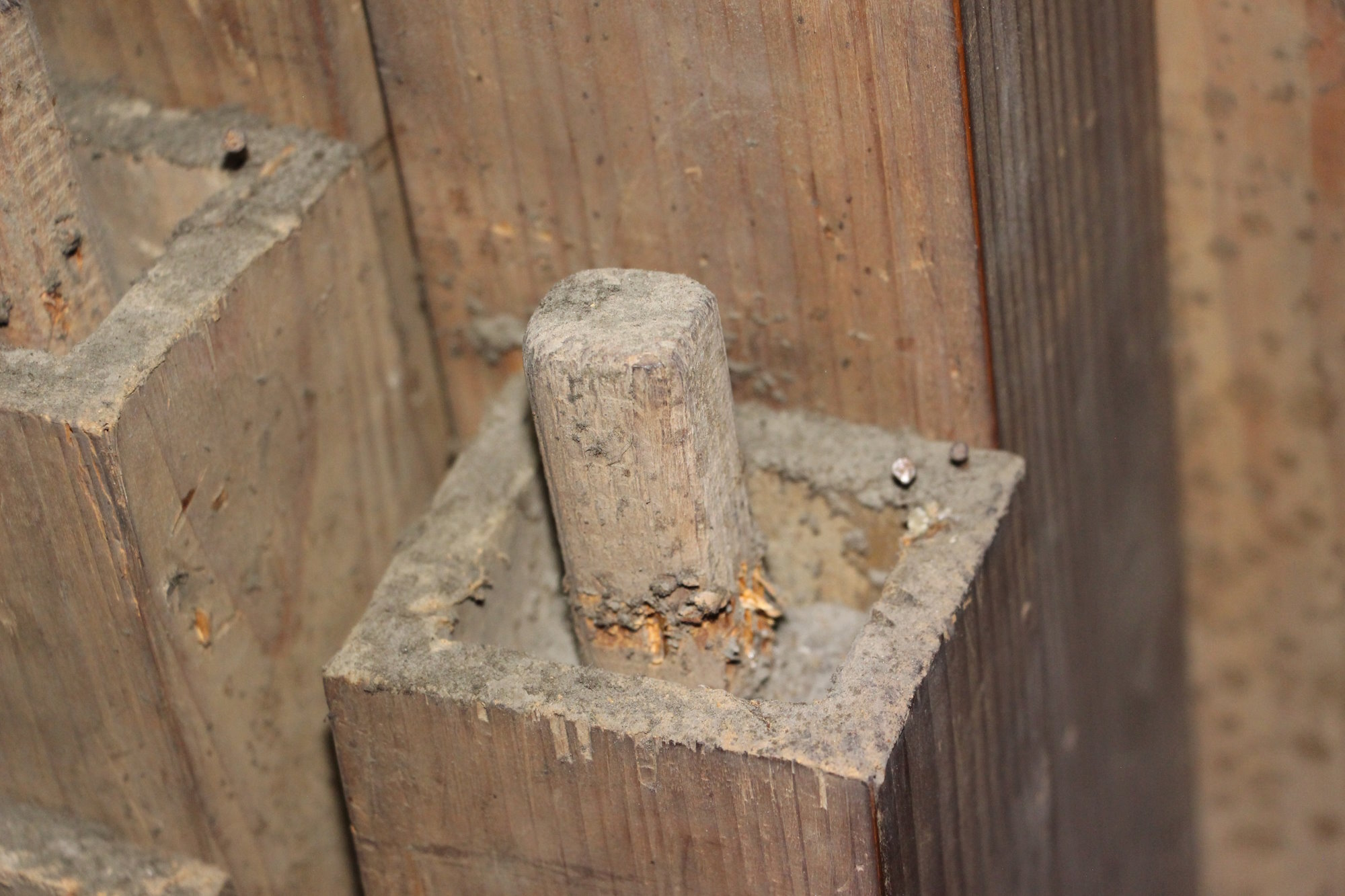
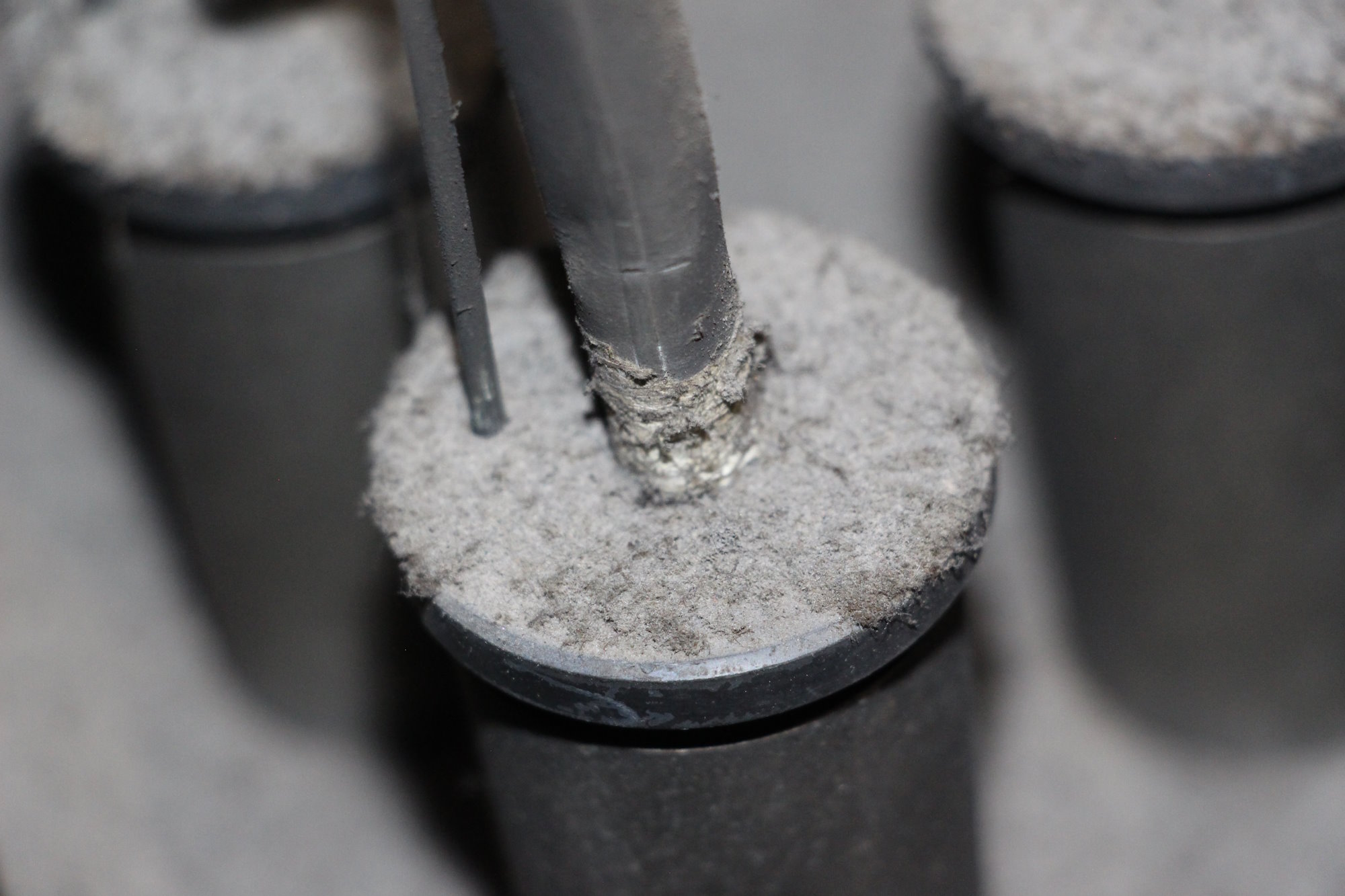
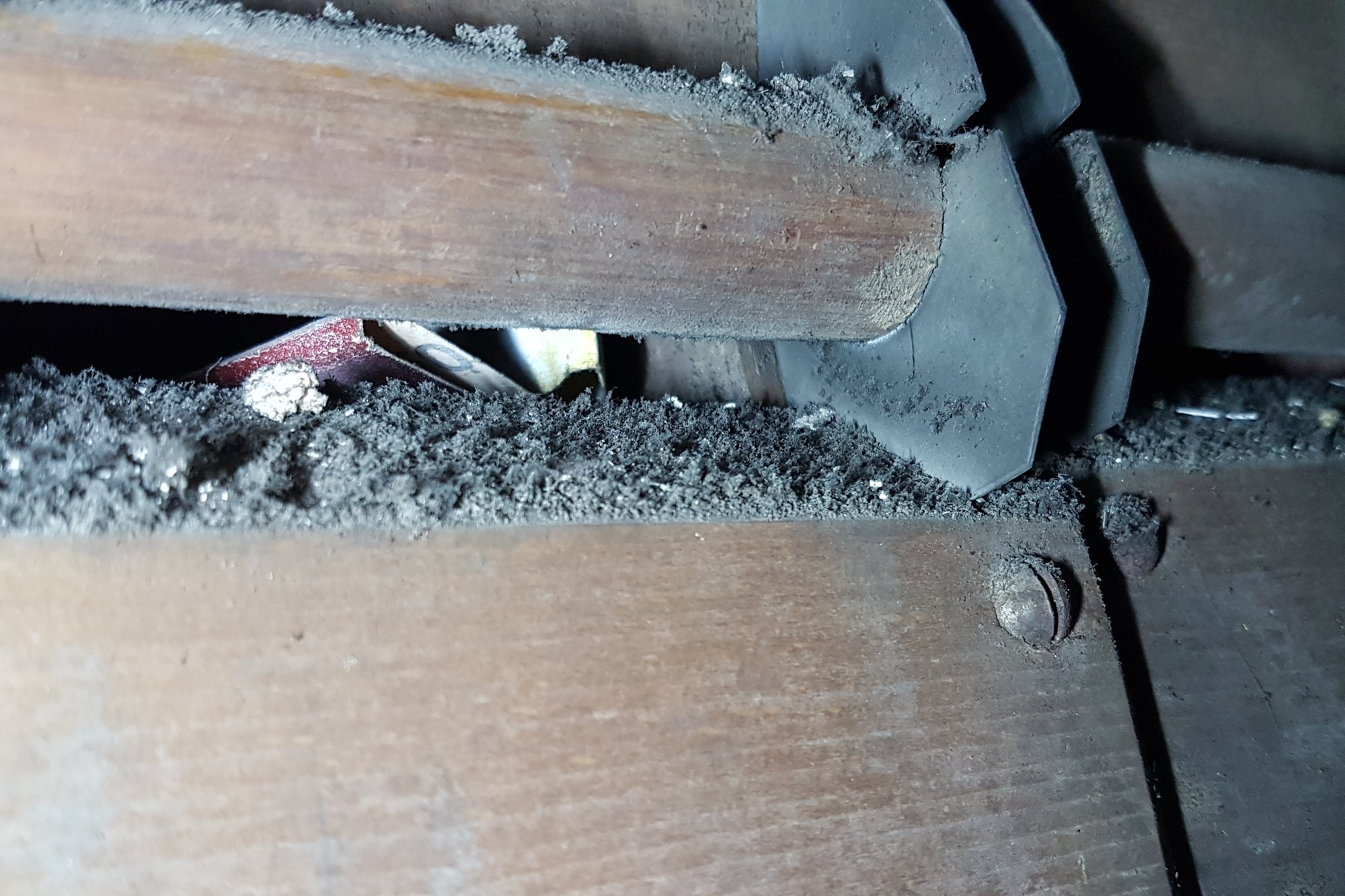
- The organ cases show the effects of damp, especially on the floor, and woodworm. In particular, mould is present on the wooden parts (windchests, pipes and support structure), most of it on the lower parts of the cases. Mould problems should be addressed as comprehensively as possible. The affected parts should be cleaned with a suitable mould cleaner and then impregnated against further attack. Careful consideration should be given to long-term measures against mould, such as ensuring that organ cases are ventilated.
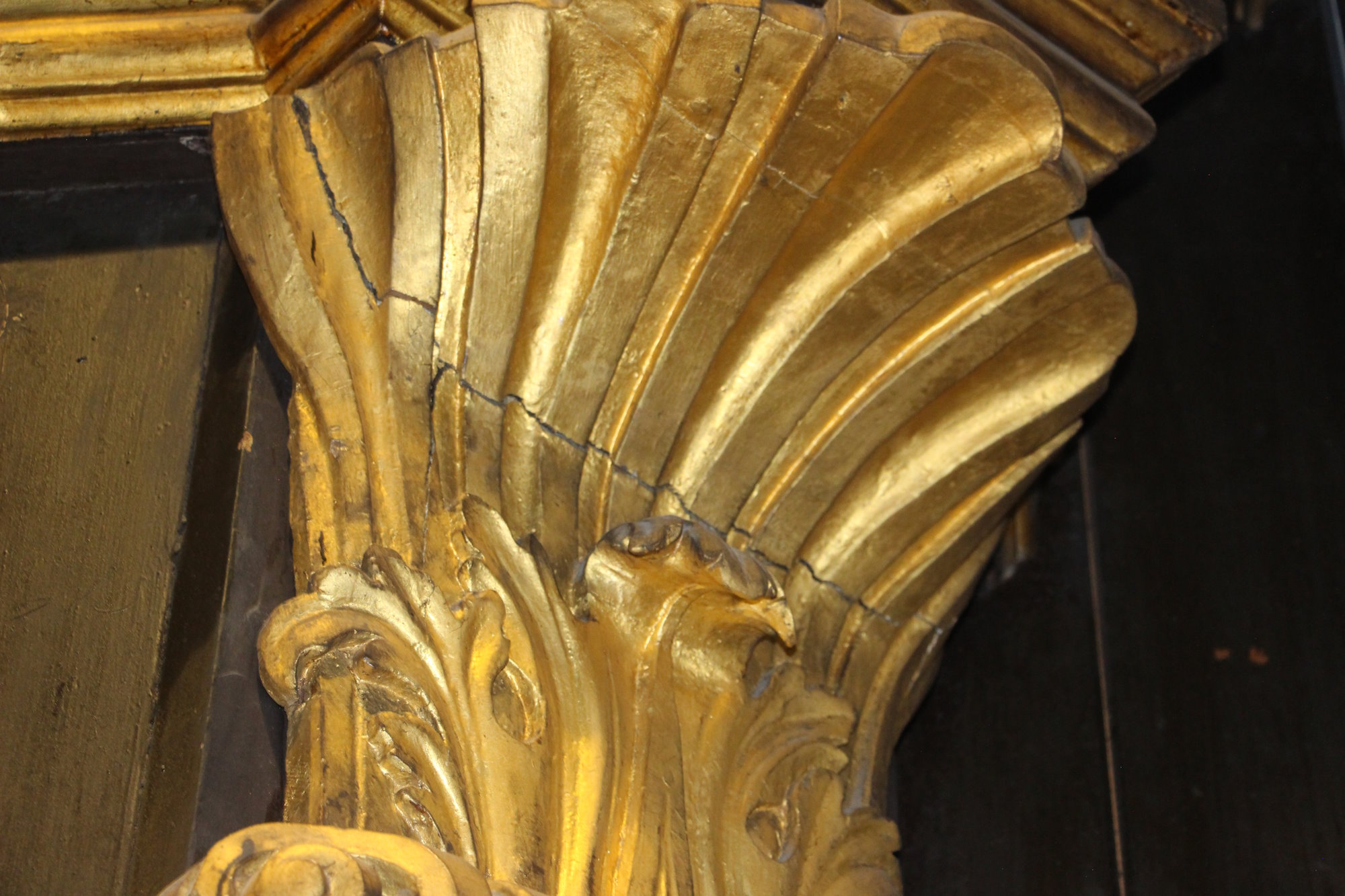
- The organ cases also exhibit damage to the exterior paint and the carved decorations. This damage needs to be analysed and assessed to ensure proper reconstruction during the restoration process. Cracked carved decorations above the construction joints, as well as gaps at some joints, are the result of past movement of the cases and require careful attention.
- All load-bearing structures should be checked for strength and proper orientation of the timber grain in the beams. When rebuilding, doors that open with a lock, hinge, or latch should be arranged correctly. Existing locks may not operate smoothly due to alterations or wear, so they should be inspected, lubricated, adjusted, and replaced if necessary.
- The inadequate electrification within the organ cases should be addressed during renovations. Before proceeding with re-electrification (including interior and exterior lighting and electrical sockets), a comprehensive electrification plan must be developed.
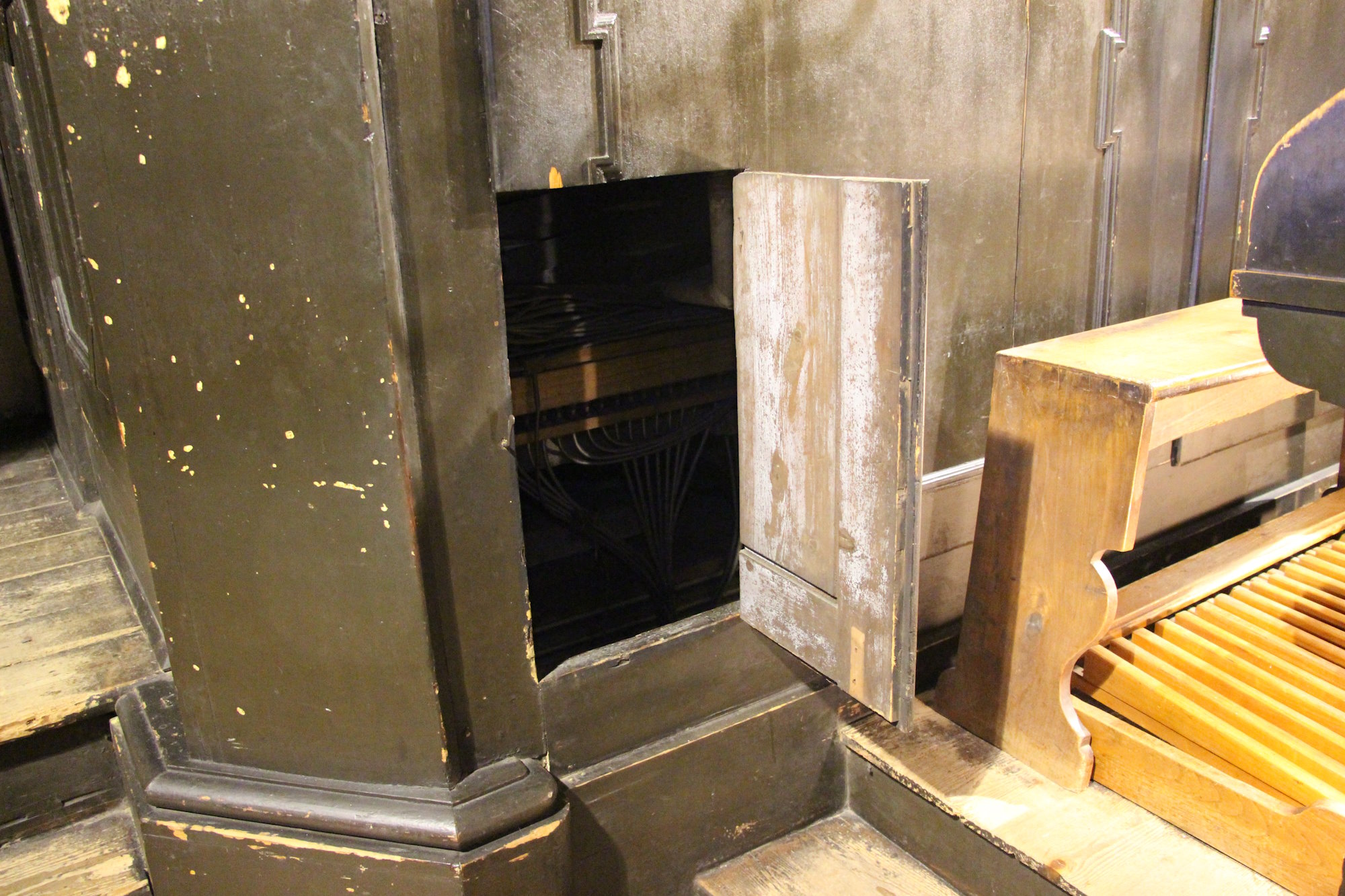
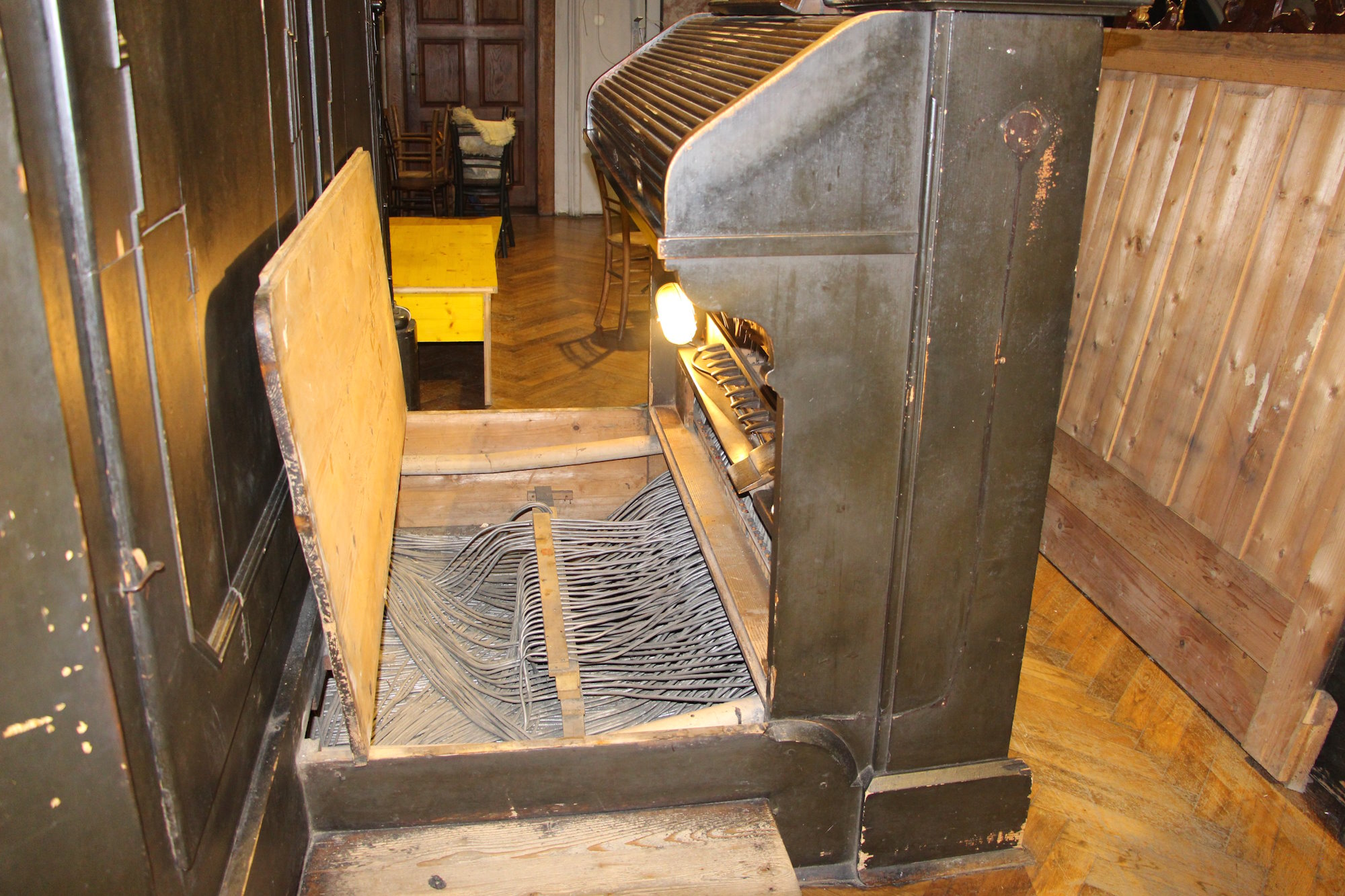
- It is also essential to ensure proper access to the cases and organ technology. Insufficient access has resulted in damage to both the cases and the organ technology, making maintenance nearly impossible. To achieve a long-term solution, a well-considered approach is necessary, drawing on established practices. This may include measures such as deepening or relocating the organ cases to allow for better maintenance access and pathways, creating a walkway to the roof of the organ cases, enabling access to the pipes by allowing the roof of the cases to open, and adding external access points, among others.

Photo: Organistica
Organ console
The organ console is positioned in front of the organ, allowing the organist to face the altar. The tilting register switches are located to the left and right of the manual keyboards.
An inspection of the console’s condition has revealed the following necessary measures:
- The console should be thoroughly documented with a plan drawing during the restoration to facilitate future maintenance.
- When restoring or reconstructing the colour of the organ cases, it is essential to ensure that the colour of the console matches and is more resistant and durable for high-stress areas.
- During the renovation, any inadequate electrification in the console’s case should be removed. Additionally, “permanent guests” of the organ console should be installed, which include a system for projecting songs, communication with the sacristy, an audio system for the organist, and a camera for monitoring liturgies or concerts.
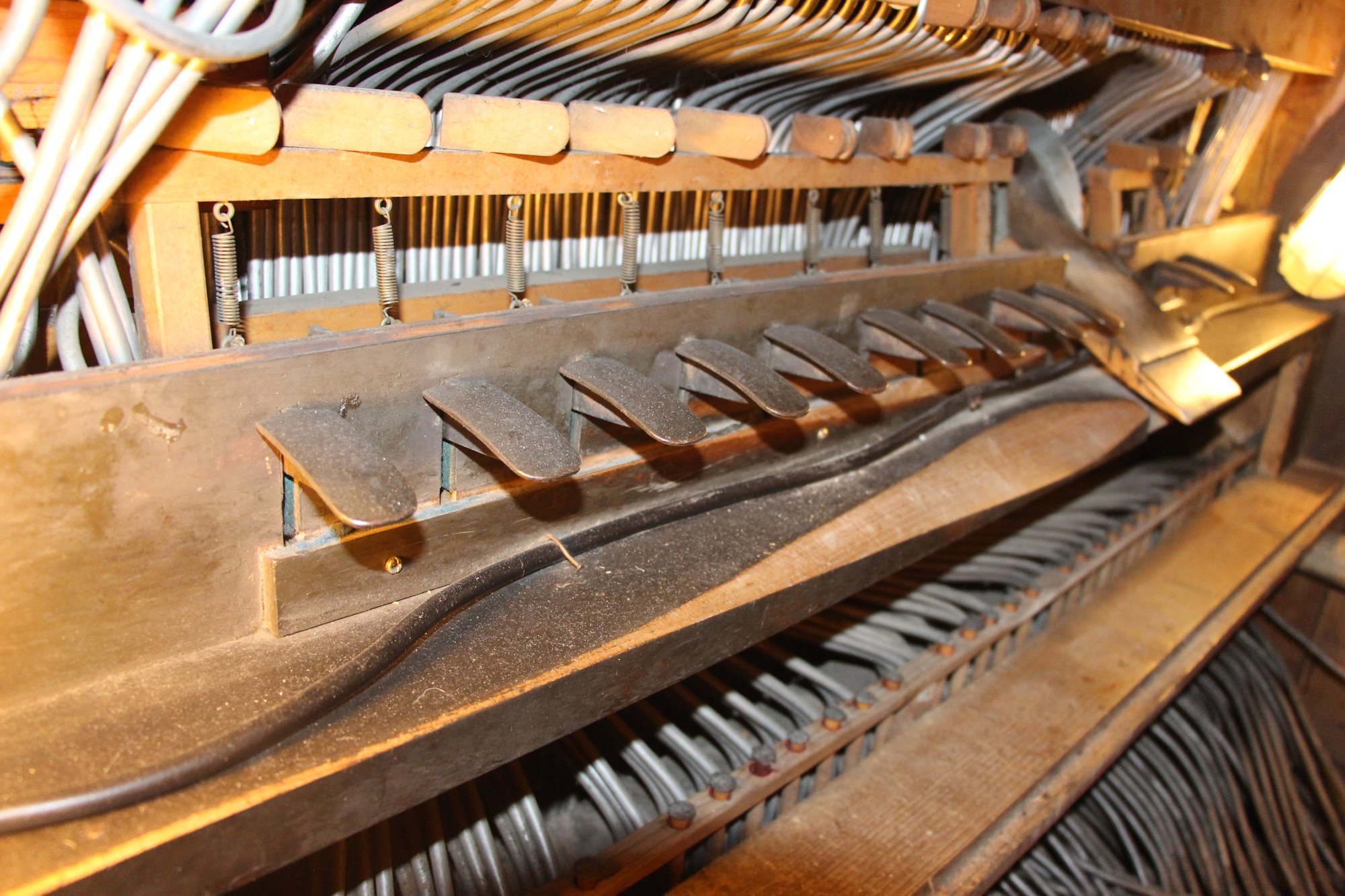
- The buttons for fixed and free combinations need to be restored. The non-functioning on/off pedals (Mezzo – Forte, Forte, Tutti, Sup. Oct. coupler I, I. Manual away, Free combination) should also be repaired. Additionally, the Crescendo mechanism requires attention for restoration.
- All components inside the console must be cleaned. This includes the wires and their threads, which should be replaced or reconstructed as necessary for reliable operation and ease of maintenance (regulation).
- There are signs of active mould within the console, which must be addressed using appropriate methods during the restoration process.
- The pedal light should be replaced with a new one, and the electrical installation inside the console must be properly organized.
- A suitable solution for the lighting of the music desk needs to be agreed upon. The location and type of the old or new organ switch should also be discussed.
- We recommend making a copy of the original Milavec bench with an adjustable mechanism, similar to the one in the Ursuline Church in Ljubljana.
- Unoriginal or later-added inscription plates should be replaced with replicas of the originals. The labels with register numbers that are stuck above the original inscription plates on the console must be removed. A removable numbering system for the tilt register switches should be arranged.
Manual keyboards: 56 tones, C-g3
- The white covering on the keys of manual keyboards must be cleaned. If any coverings are badly damaged, they should be replaced with new ones after prior consultation.
- Worn leather in the guide grooves should be replaced, and the guide pins should be cleaned.
- All keys must be re-polished. Worn felt on the frames should be replaced, and the keyboards must be adjusted. The backing strips at the rear of the keyboards, where the keys rest, should be flattened and stiffened.
Pedal keyboard: 30 tones, C-f1
- The pedal keyboard needs to be cleaned, the felt and leather in the guides replaced. If necessary, the springs and the keyboard should be rebalanced.
- Pedals that are worm-eaten or badly damaged shall be replaced with new ones. To protect the pedals from dirt, they shall be coated with a resistant oil or a suitable product.
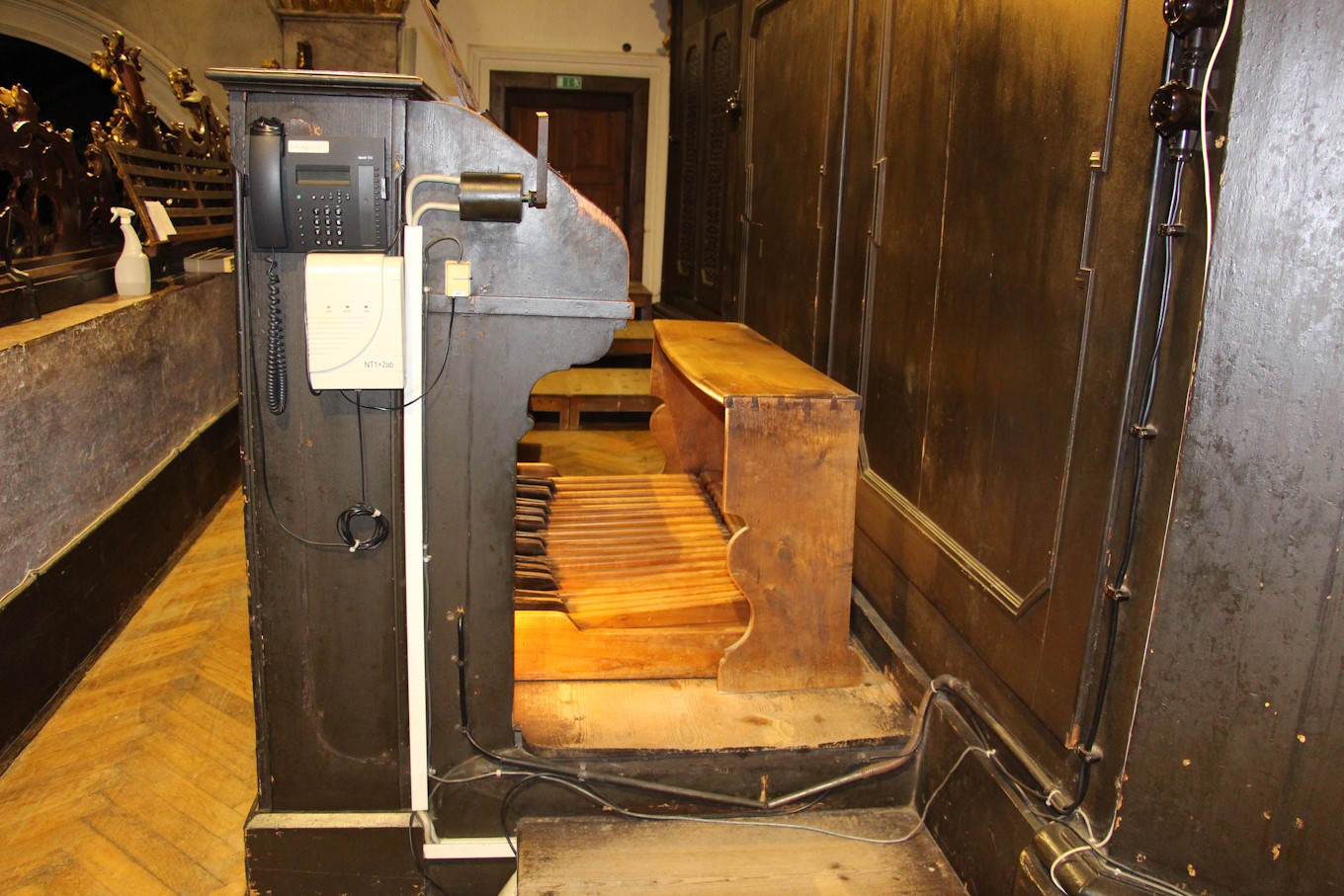
Photo: Organistica
Implementation of a registration combinations memory
The specifications and desired features for the registration combinations memory need to be clearly defined. A comprehensive survey of recognized manufacturers and suppliers, both domestically and internationally, is essential.
It is recommended that upon completing the organ upgrade, the contractor should conduct a demonstration on how to use the registration combinations memory. Additionally, the relevant operating instructions and documentation related to the upgrade should be provided.
Special attention is required for the following aspects:
- positioning the magnets in an easily accessible part of the organ
- installing the electrical wiring and ensuring its safety
- ensuring reliable operation
- implementing a multi-user system
When selecting a system, it is important to follow good practice examples. A notable case is the organ from the Link brothers’ workshop (Orgelmanufaktur Gebr. Link), located in the evangelical church of Giengen an der Brenz, Germany (Gebr. Link Orgelbau, Op. 450, 1906). This organ, situated in the west gallery, is protected and has remained mostly unchanged. It is the only large organ in southern Germany that dates back to the late Romanesque period. In the 1970s, this instrument narrowly avoided a significant conversion to a neo-Baroque sound style proposed by Helmut Bornefeld. The organ features 51 registers across three manuals and a pedal. In 2017, a sequencer (which allows for adjustable combinations) was added, initiated by the then-cantor, Christian Barthen. The commission for the restoration of the Milavec organ in Ljubljana Cathedral is encouraged to examine this instrument.
Wind system
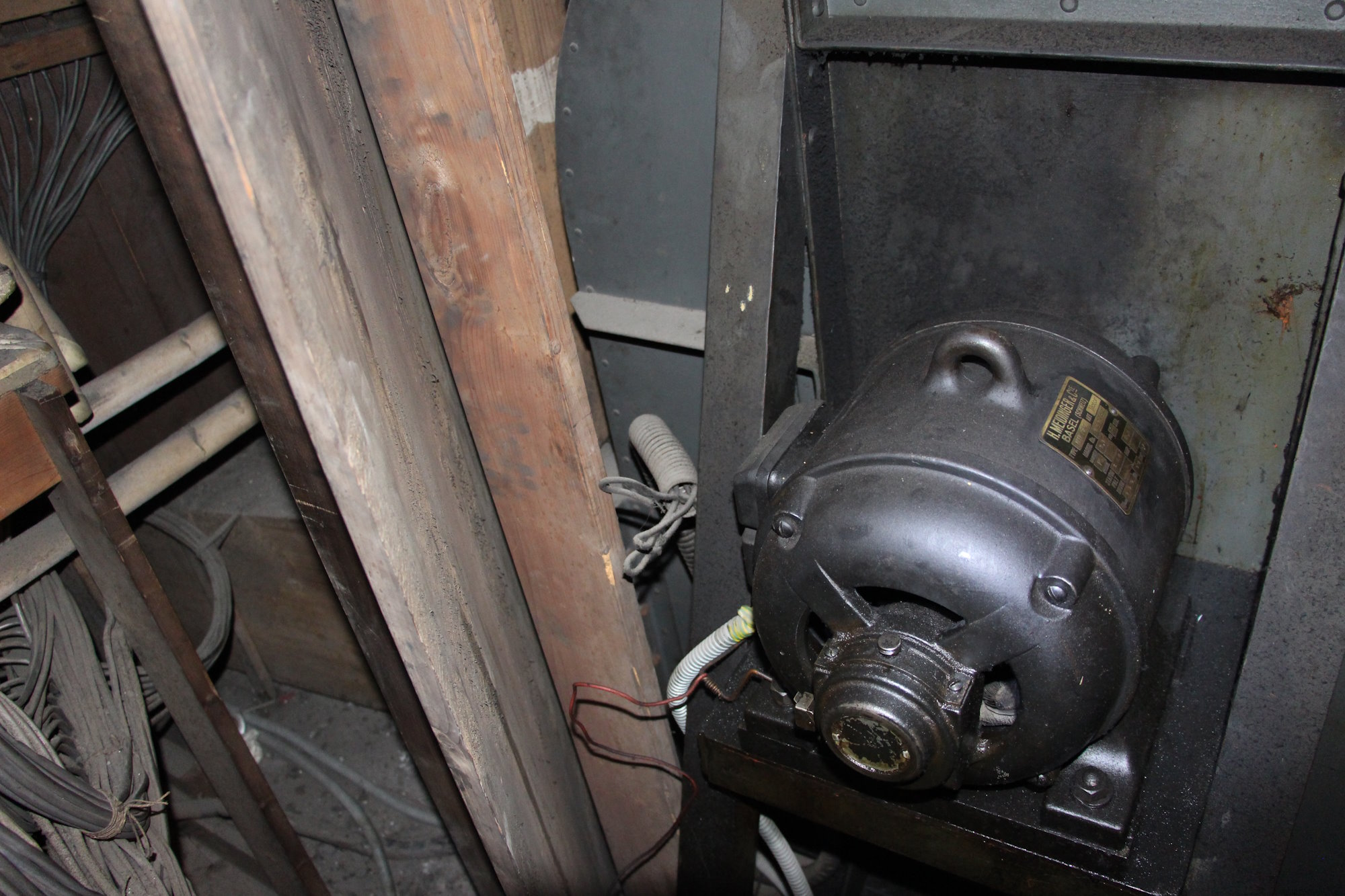
The organ is equipped with an electric blower from H. Meidinger & Cie Basel (Schweiz), model NTK 71, serial number: 102082, operating at 950 rpm.
The necessary modifications to the wind system are as follows:
- The electric blower needs to be cleaned and refurbished.
- A new solid wooden protection chamber with additional internal sound insulation should be constructed for the electric blower. Adequate air filtration must be provided at the inlet flap of the chamber. When positioning the electric blower at the bottom, a rubber pad (dampers) should be installed to minimize structural noise.
- The air inlet to the main double rise bellows should be rearranged to reduce the audibility of air noise. An internal stop valve with a roller may be installed within the main bellows to ensure effective damping. The foot-operated wind system should be preserved and appropriately renewed, including the refitting of the bellows and associated valves.
- All bellows in the organ should be opened, cleaned, and sealed. Depending on their condition, the worn leather (at the folds, especially on the inside) should be partially or completely replaced. Additionally, the blue paper on the outer visible surfaces of the bellows should be replaced.
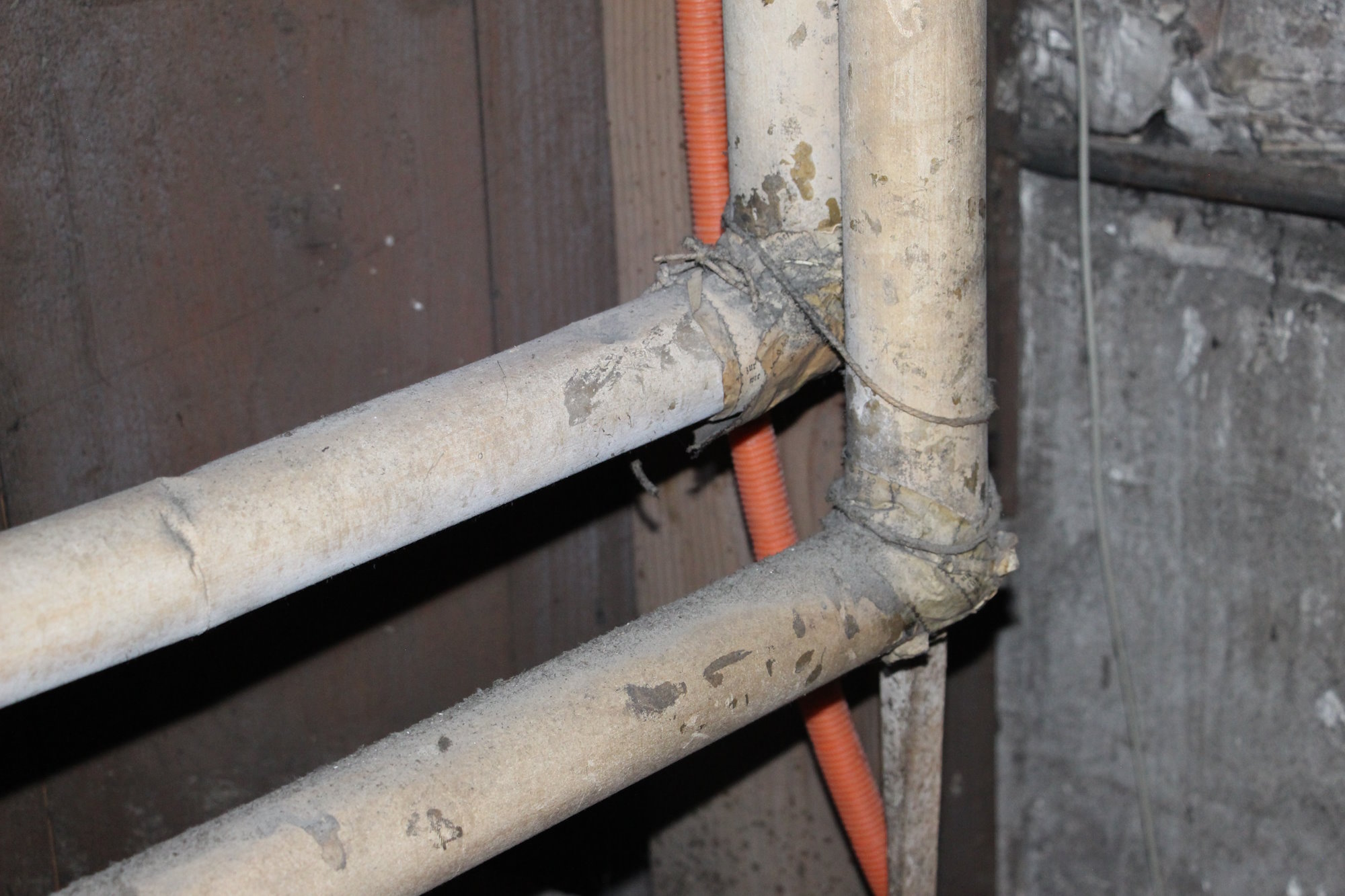
- The windchest supply channels should be cleaned and inspected. If necessary, they should be resealed, replaced, or reconstructed (using cardboard conduits).
- When reconstructing the brick weights on the bellows, they should be wrapped in suitable paper to prevent disintegration.
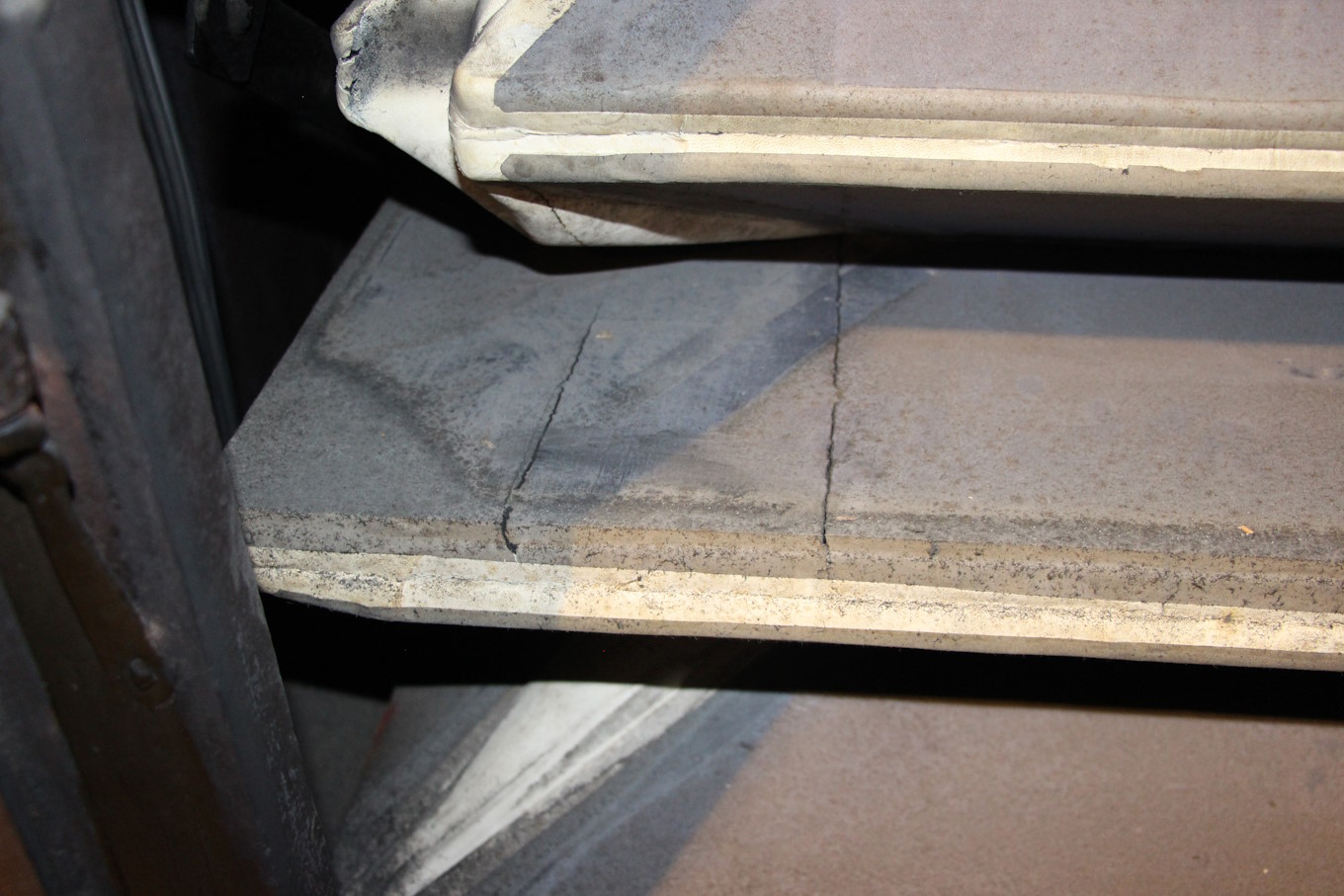
Photo: Organistica
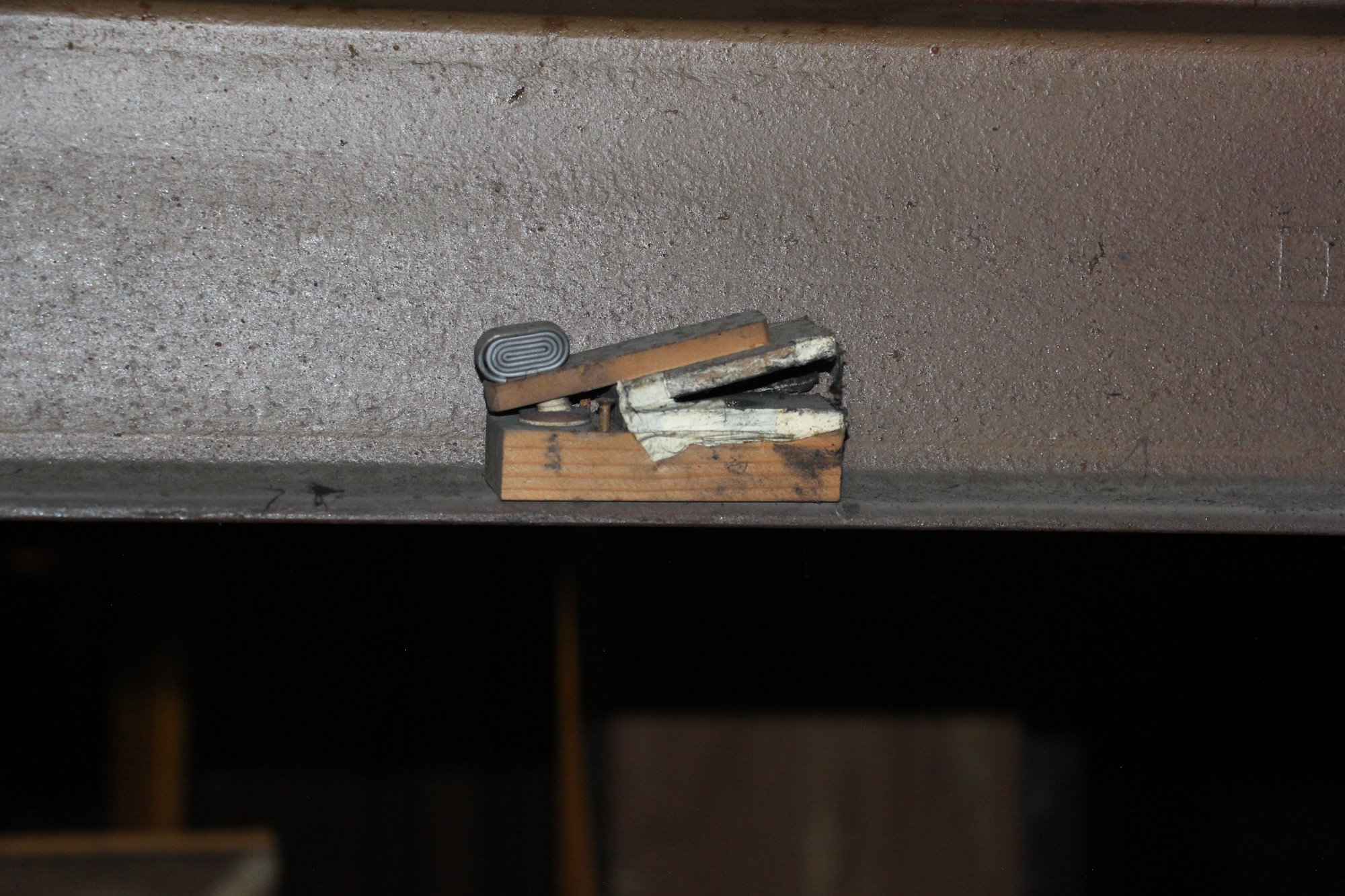
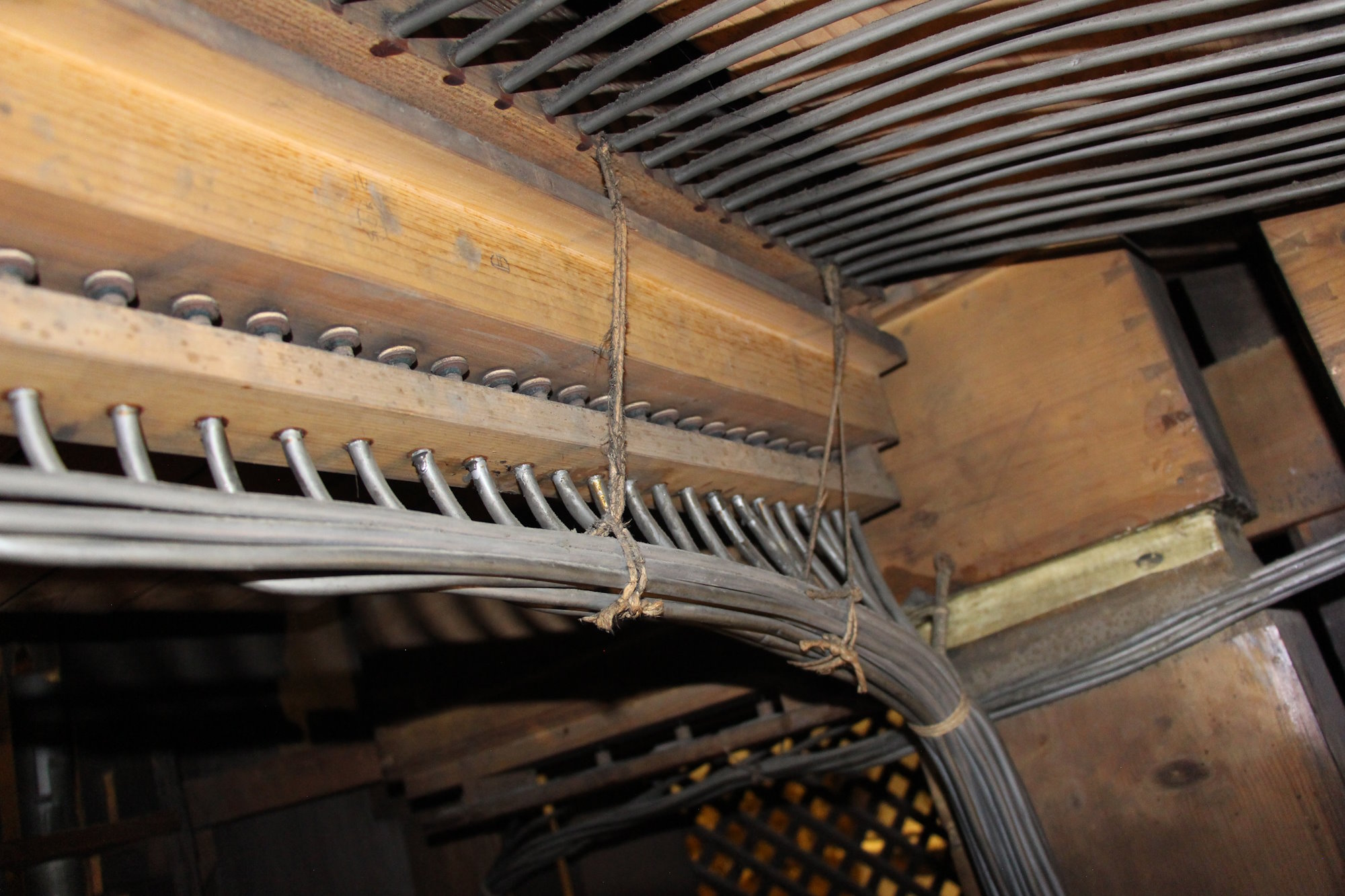
Pneumatics
The following treatments are required for the pneumatics:
- Replace all worn and damaged pneumatic purses. When ordering suitable pneumatic purses, it is important to pay close attention to the quality of the materials and workmanship. Additionally, ensure that the order includes extra stock for ongoing maintenance of the pneumatic purses.
- For better accessibility and easier maintenance, it is advisable to reroute the pneumatic lead pipes during reassembly. While the lead pipes can be preserved to some extent, any worn or damaged pipes should be replaced with new ones or reconstructed. In areas where the pipes are exposed, adequate protection must be provided to prevent damage.

Photo: Organistica
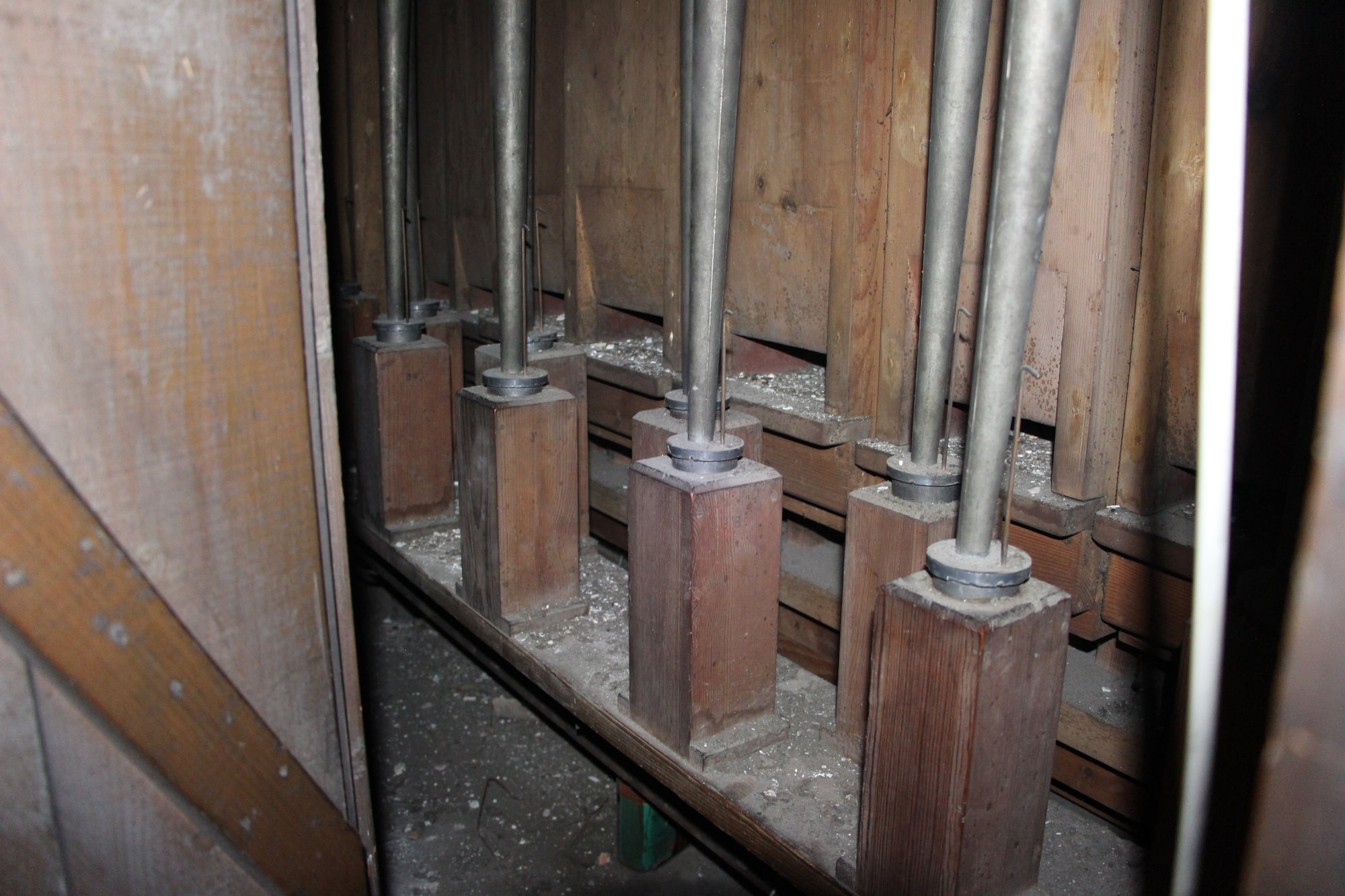
Windchests
To ensure the future maintenance of windchests, it is essential to document them when they are rebuilt, including detailed plan drawings.
The following measures should be taken for the windchests:
- All windchests should be carefully removed from the organ case and fully restored. This process must occur under suitable and stable climatic conditions, similar to those found in a church.
- After dismantling the pipes, the pipe boards must also be taken apart and cleaned. They should be properly sealed and protected against wood-boring pests. Additionally, any cracks or damage to the stop chambers must be repaired appropriately.
- Following the cleaning, the sealing on the cone valves should be inspected, and the leather replaced if necessary. The threads on the wires need to be cleaned, and all cone valves should be realigned.
- Damaged support pipe rack should be rehabilitated properly and finished suitably, if agreed upon.
- The register chambers and the undersides of the pipe boards should be checked for warping during disassembly, and any warped pipes must be straightened. All register valves should be renewed, and stiffened leather should be replaced. Furthermore, the register outlet valves on the register booths should be reconstructed.
- During restoration, it is necessary to ensure adequate access to the entire pipe division and pay special attention to the supporting structure of the windchests.

Photo: Organistica
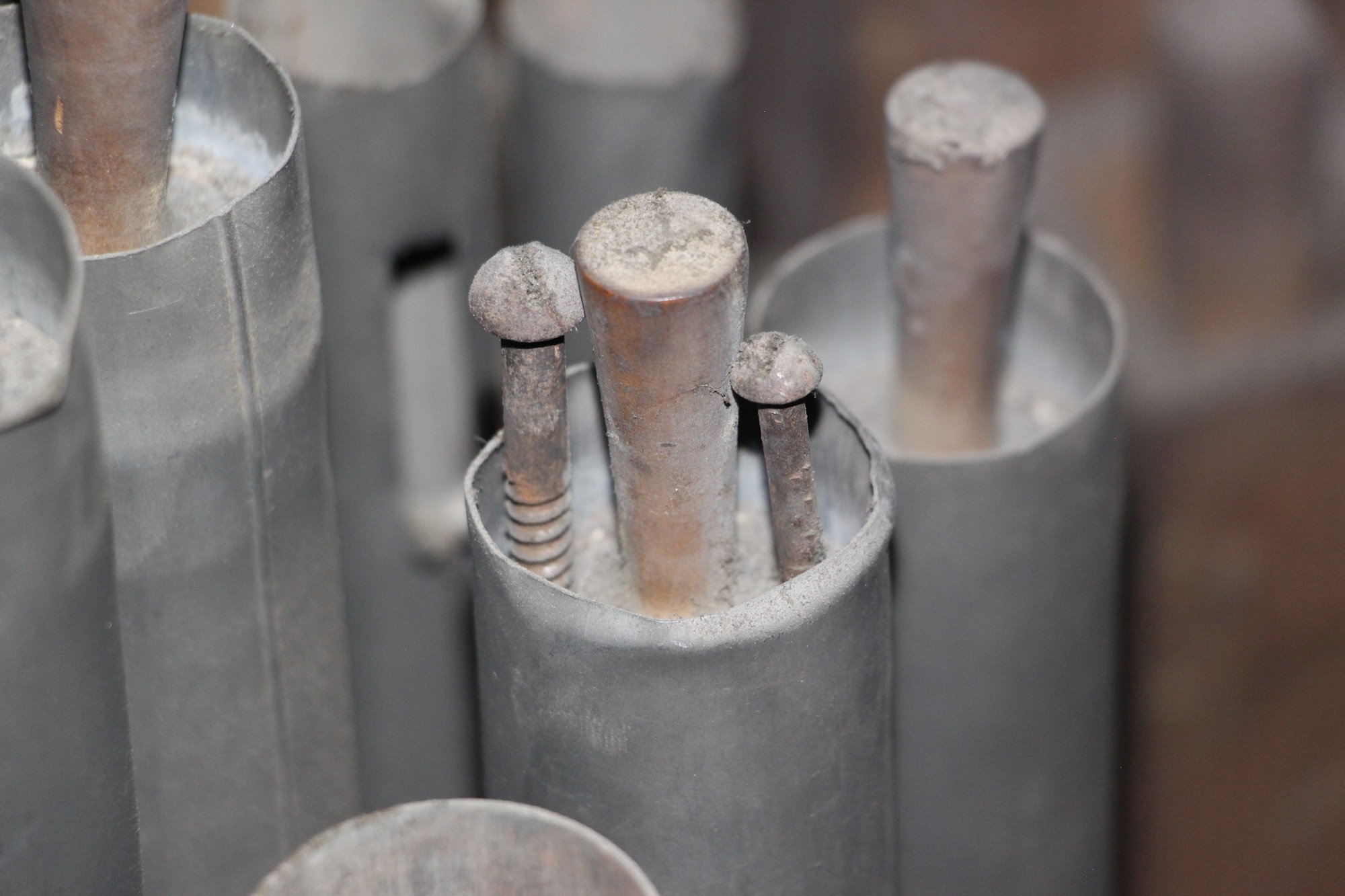
Pipes
The following interventions are required for the pipes:
- All pipes must be dismantled, cleaned, and restored according to established procedures.
- Metal pipes must be straightened and repaired. Their feet, which may have collapsed under weight, need to be reinforced, and any damaged edges (regulating slots) should be soldered.
- Some metal pipes have been improperly replaced with pipes of incorrect dimensions during previous repairs. This includes replacements without regulating slots, conical pipes replaced by cylindrical pipes, and pipes with incorrect foot heights. These should be replaced with accurate replicas of the originals.
- Pipes on the façade should be polished to restore their original gloss, either by hand or using machinery, following an agreed-upon procedure.
- All cracks and loose glued joints in the wooden pipes must be repaired. Any wormholes that have developed should also be addressed with appropriate treatments. All tabs should be unscrewed and slots levelled. Rusted bolts need to be polished, while damaged bolts must be replaced. On covered pipes, the covers should be restored and adjusted, and the stiffened leather must be replaced (modifying the felt seal). Damaged handles on the covers that lack strength due to wormholes must be replaced with new replicas. Similarly, wornout wormholes on the pipe legs should be replaced with replicas, and any wormholes present must also be addressed accordingly.
Voicing:
- All registers will be voiced and tuned again, with special attention to preserving the original character of Milavec’s voicing.
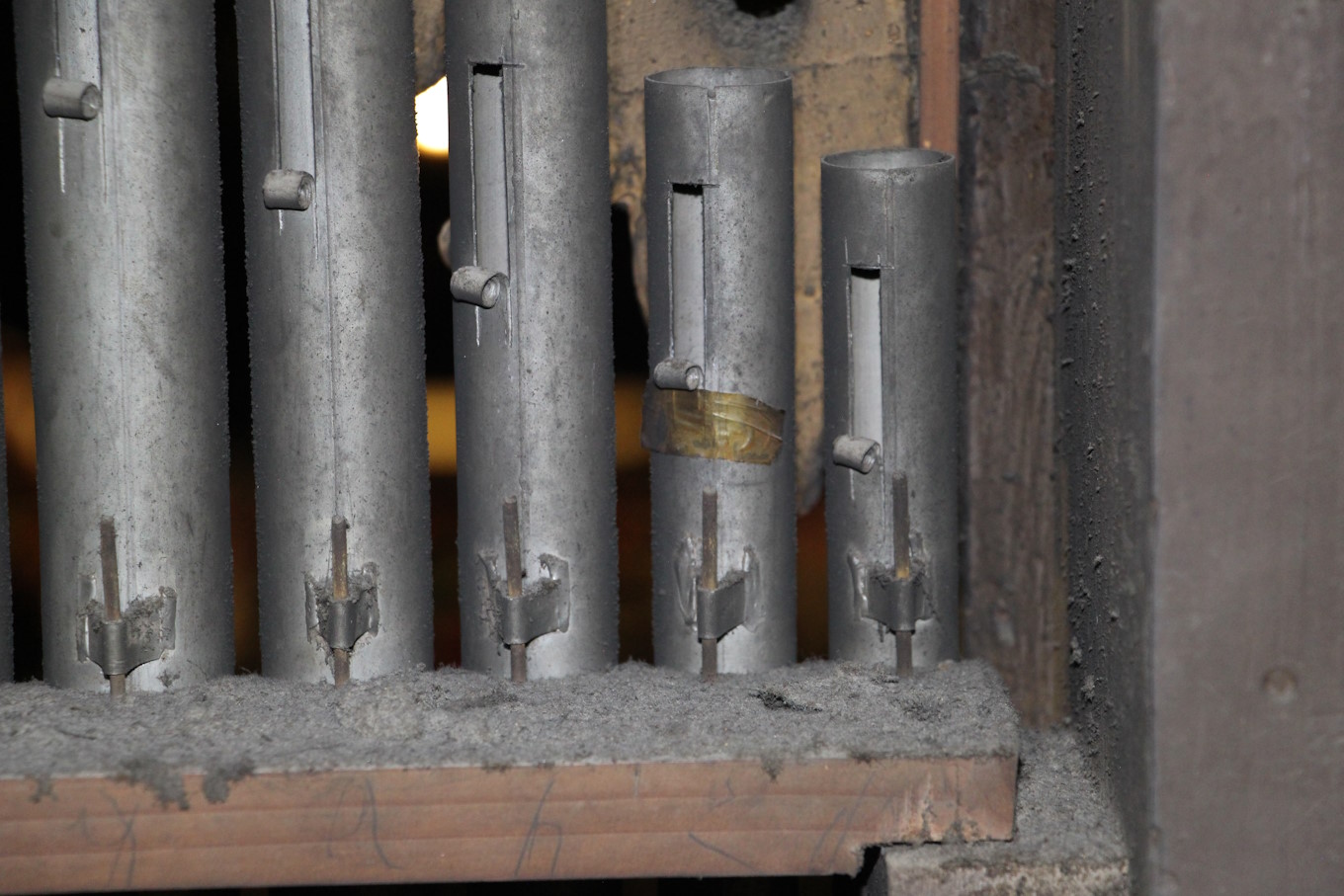
Photo: Organistica
Construction Work
The restoration of the organ in the Ljubljana Cathedral presents both an opportunity and a challenge that will require extensive construction work. This work will involve experts from various construction disciplines, from planning through to execution. Collaboration with the ZVKDS (Institute for the Protection of Cultural Heritage of Slovenia) will also be crucial during this process.
The construction plan primarily encompasses the restoration of the north and south bell towers, and the choir. Planned renovations include the flooring, fencing, windows, doors, walls, electrification, and ventilation systems. Security measures will be enhanced with the installation of access pathways, while a temperature and humidity control system will improve both the usability of the space and the proper maintenance of the equipment.

Photo: Organistica