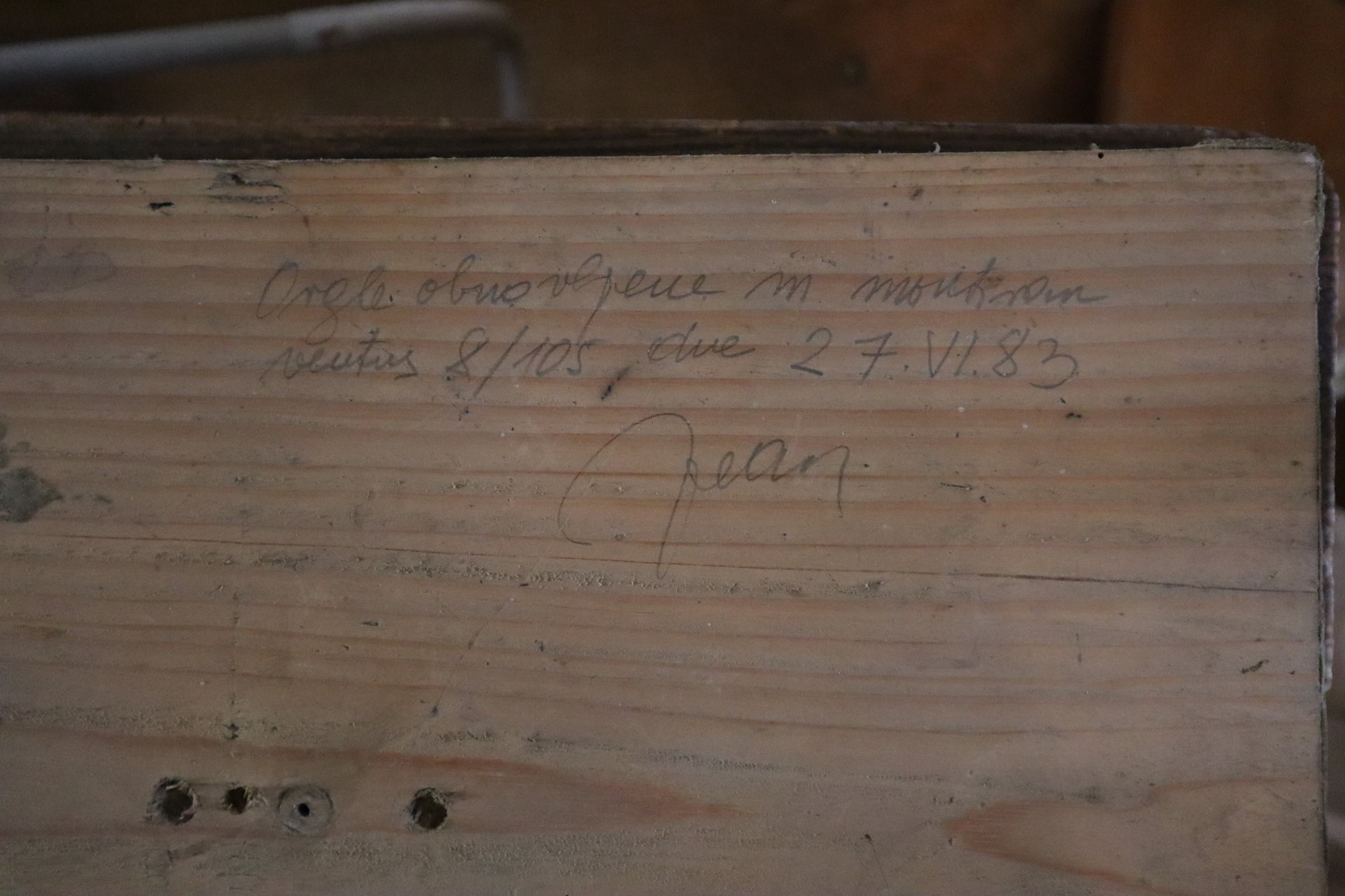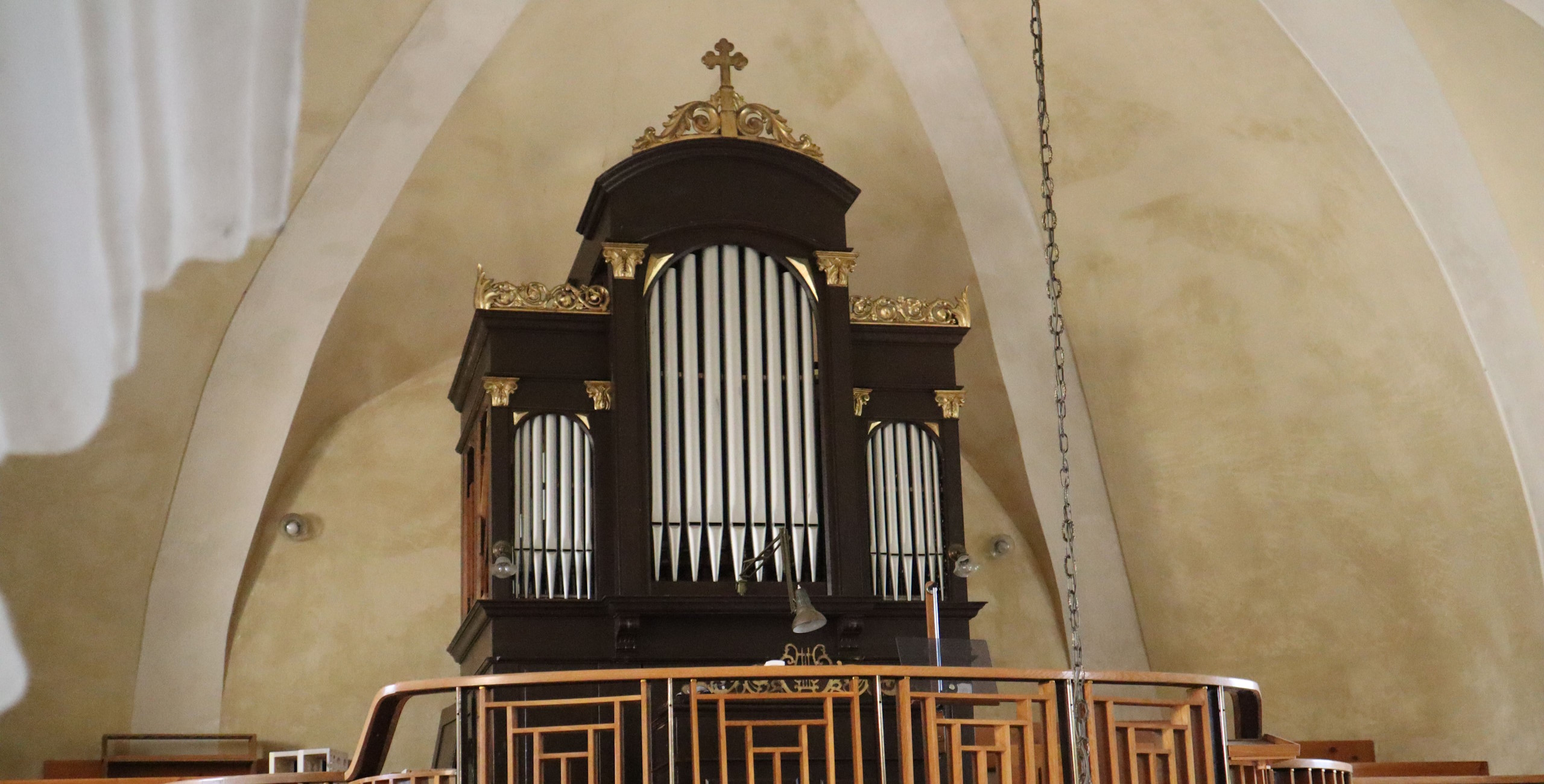
Until 2022, the church of St. Michael in Olševek was home to the organ built by the master organ builder Karol Kriegel, who was a disciple of Franc Goršič. He crafted it in 1901 as his fifth independent work. The organ was restored in 1983 by the organ workshop of Anton Jenko from Šentvid near Ljubljana. An inscription on the bellows for the Subbass Piano bears witness to the fact: “Organ restored and installed Ventus 8/105, on June 27, 1983, Jenko”.
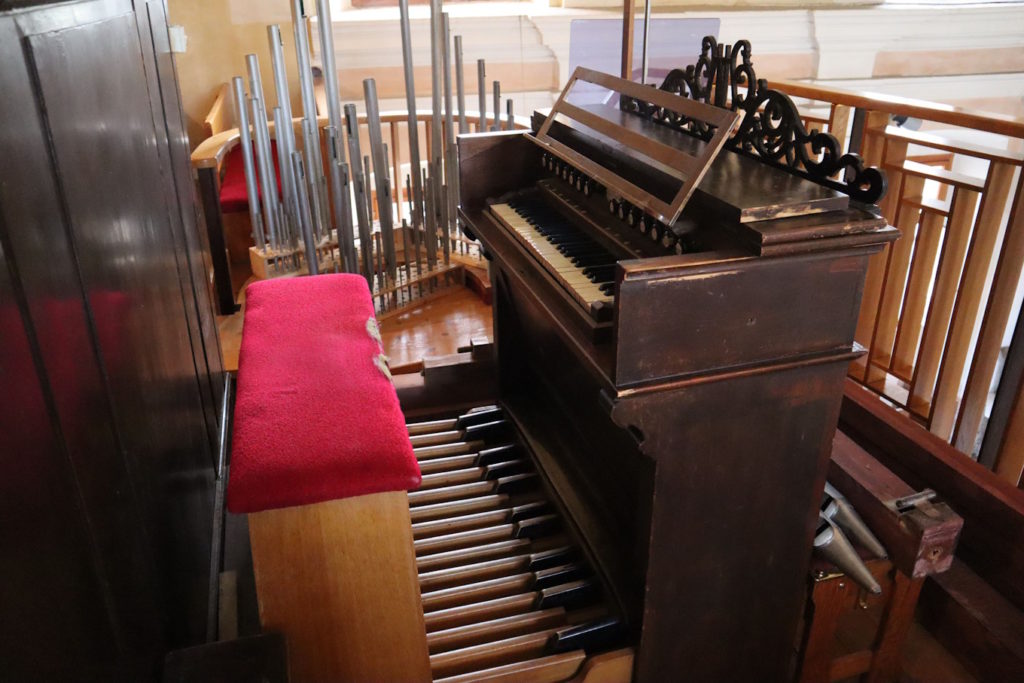
Photo: Organistica
Documenting the organ before dismantling it
On August 1, 2022, the Karol Kriegel organ was dismantled by the Orglarstvo Močnik. The wooden parts of the organ were destroyed, while the metal pipes and the console were put into storage. The organ case remains in the church, and a new instrument will be installed in the future.
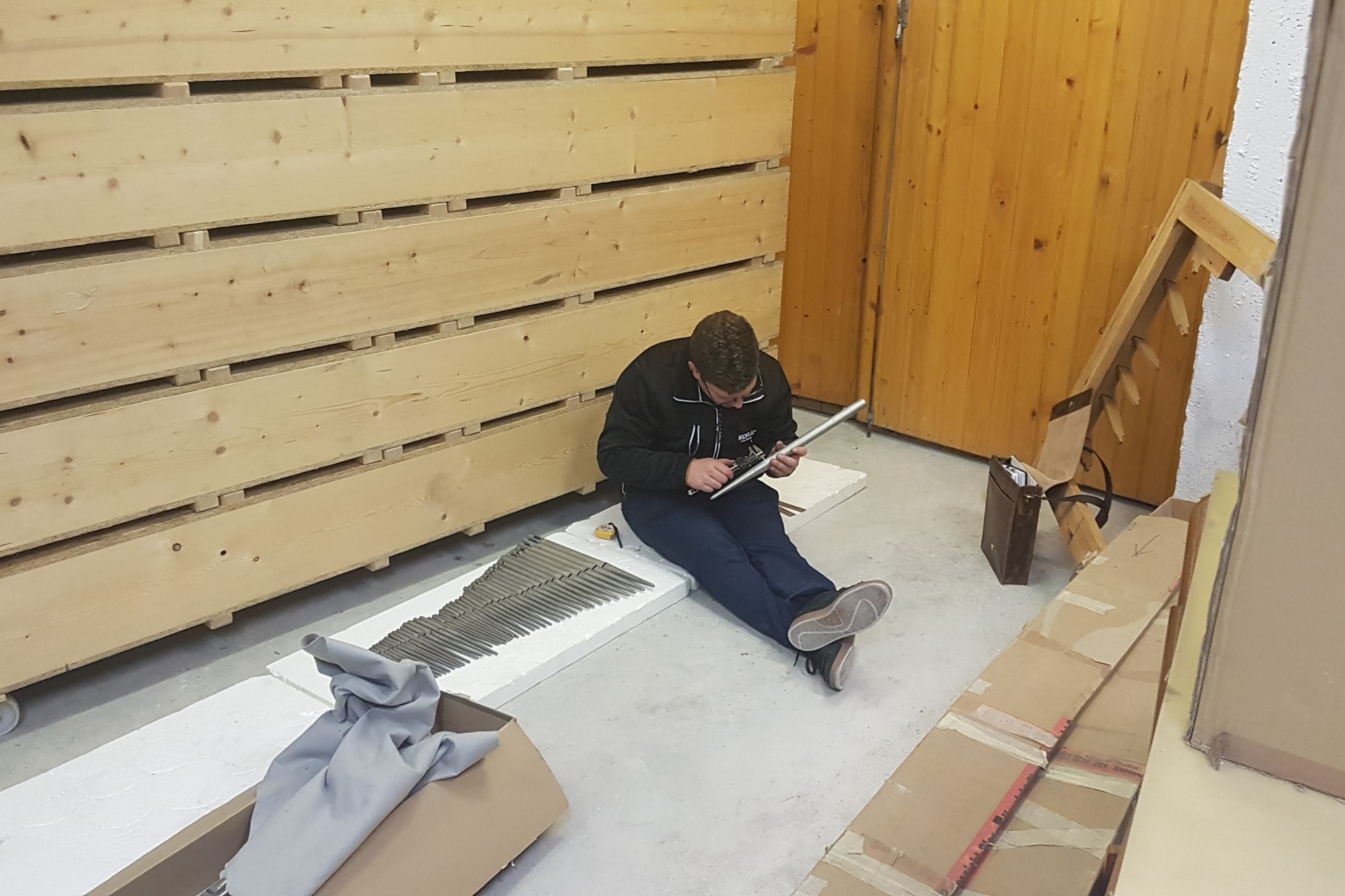
Before the organ was dismantled, we documented it both technically and pictorially. Unfortunately, due to the poor condition of the instrument, it was not possible to document its sound.
Technical documentation included the following measurements:
- basic dimensions of the church, choir, organ case, and console
- tuning and temperature
- wind system
- windchests and the pipes arrangement on the windchests
- measurements of the pipes and pipe scales
Photodocumentation of the individual parts and details of the organ
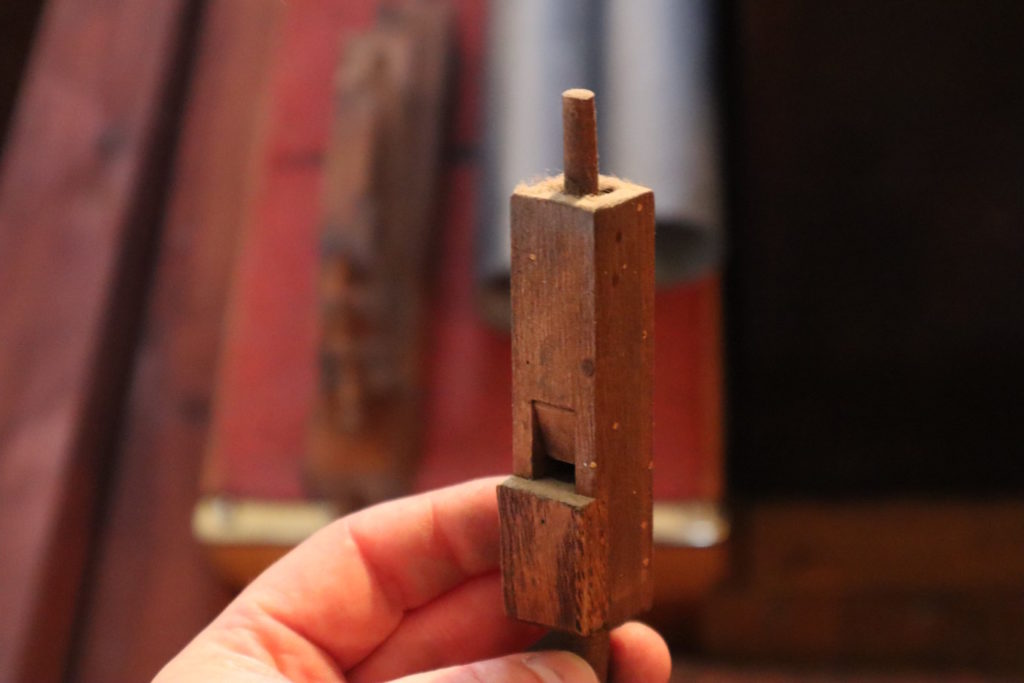
Photo: Organistica
Data and findings
Documented: July 28 – August 1, 2022
Number of pipes: 609 (wood: 221, metal: 388)
The organ is mechanical with a cone chest:
- Number of windchests: 2 (manual: 1, pedal: 1)
- Wind pressure: 86 mm water column
- Tuning: a1 = 443,7 Hz at 25,7 °C and humidity 53 %
- Wind system: one double bellows with one feeder bellows (electric blower), bellows for Subbas Piano
The following modifications to the organ are known:
- On the bellows of the Subbass Piano, there is a note: “Organ restored and installed Ventus 8/105, on 27.6.1983, Jenko”.
Notes:
- The Subbass Piano 16′ was not in working order when documented.
- The Vienna Flute 8′ manual register and the Octavbass 8’ pedal register were of recent manufacture, judging by their preservation and signs of workmanship.
- The register cane of the Octavbass 8′ pedal register was added to the rest of the pedal, opened by a Gedeckt 8′ drawstop.
- Organist Tilen Bajec recalls from his memory from the 2002/2003 period: the added Octavbass 8′ was opened by a drawstop for the Subbas piano, while the Gedeckt 8′ was a blind drawstop on the far left.
- The difference between the pedal tracker and the manual tracker was interesting: the manual tracker lifted the cones via the angles, while the pedal tracker lifted the cones via the axes.
Organ disposition
| Manual (C – f3) | Pedal (C – d1) |
| Principal 8’ (C-G wood, GIS-f3 metal) | Subbas 16’ (wood) |
| Gamba 8’ (C-H wood, c0-f3 metal) | Subbass Piano 16′ |
| Dunajska Flavta 8′ (C-H les, c0-f3 metal) | Cello 8′ (wood) |
| Bordun 8′ (wood) | Gedeckt 8′ (wood) |
| Vox Celestic 8’ (c0-f3 metal) | |
| Salicet 4′ (wood) | |
| Octava 4′ (metal) | |
| Mixtura III 2 2/3’ (metal) | |
| Coupler: I-Ped, Super I (C – f2) | |
Mixtur III 2 2/3′
| C | c0 | fis1 | c2 | c | f3 | |
| Vrsta I | 2 2/3′ | 2 2/3′ | 2 2/3′ | 2 2/3′ | 2 2/3′ | 2 2/3′ |
| Vrsta II | 2′ | 2′ | 2′ | 2′ | 2′ | 2′ |
| Vrsta III | 1′ | 1′ | 2′ | 2′ | 2′ | 2′ |