
According to the information known and obtained so far, Goršič used the names Oboë 8′ and Posaune 16′ for the beating reeds and Hoboa 8′ and Bombard/-e/-on 16′ for the free reeds in his entire oeuvre. As a rule, Oboë 8′ and Hoboa 8′ are always on the second manual, except in the offer for the new organ at Brezje.

Photo: Orglarstvo Močnik
In which Goršič organs do we find free reeds?
Free reeds are used in the following Goršič organs:
- Church of St. George, Stara Loka (Op. 2, 1865, Bombarda 16′)
- Franciscan Church of the Annunciation, Ljubljana (Op. 11, 1870, Hoboe 8′ and Bombarda 16′)
- Church of St. Stephen, Ribnica (Op. 19, 1874, Bombarda 16′)
- Church of the Franciscan Monastery, Kamnik (Op. 27, 1877, Hoboa 8′ and Bombardon 16′)
- Church of St. Urh, Smlednik (Op. 34, 1881, Hoboa 8′ and Bombarda 16′)
- Church of St. James, Ljubljana (Op. 36, 1882, Hoboa 8′)
- Church of St. Stephen, Vipava (Op. 57, 1892, Bombarde 16′)


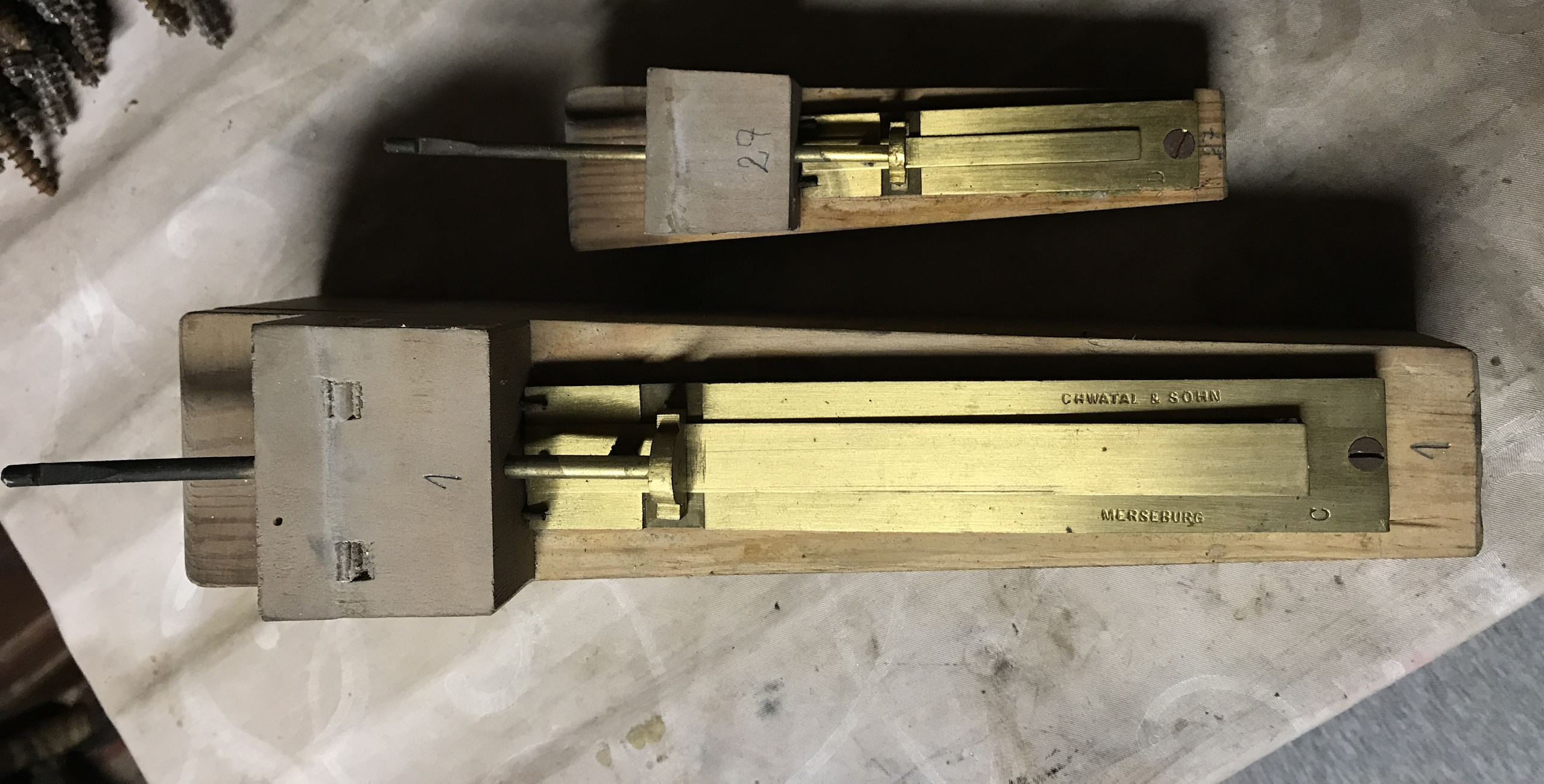
Free reed of the C tone of the Bombarda 16′ pedal register from the Goršič organ in Vipava
Photo: Orglarstvo Močnik
What’s different in Goršič’s offer for the organ at Brezje
From the article Orglarski mojster Franc Goršič (1836-1898) with the subtitle Spomini na očeta, written by Goršič’s son France Goršič (Kronika, 1967, No. 2), we learn that on June 25, 1893, Goršič made an offer for the organ in the church at Brezje. This organ would have 25 registers on two manuals and a pedal, including Bordun 8′ and Hoboe 8′ on the first manual and Bombarde 16′ in the pedal. However, upon examining the offerings held in the Ljubljana Archdiocesan Archives, it became apparent that the above did not match. The first manual proposes the registers Bordun 16′, divided into bass and discant, and Oboë 8′, and Posaune 16′ in the pedal.


