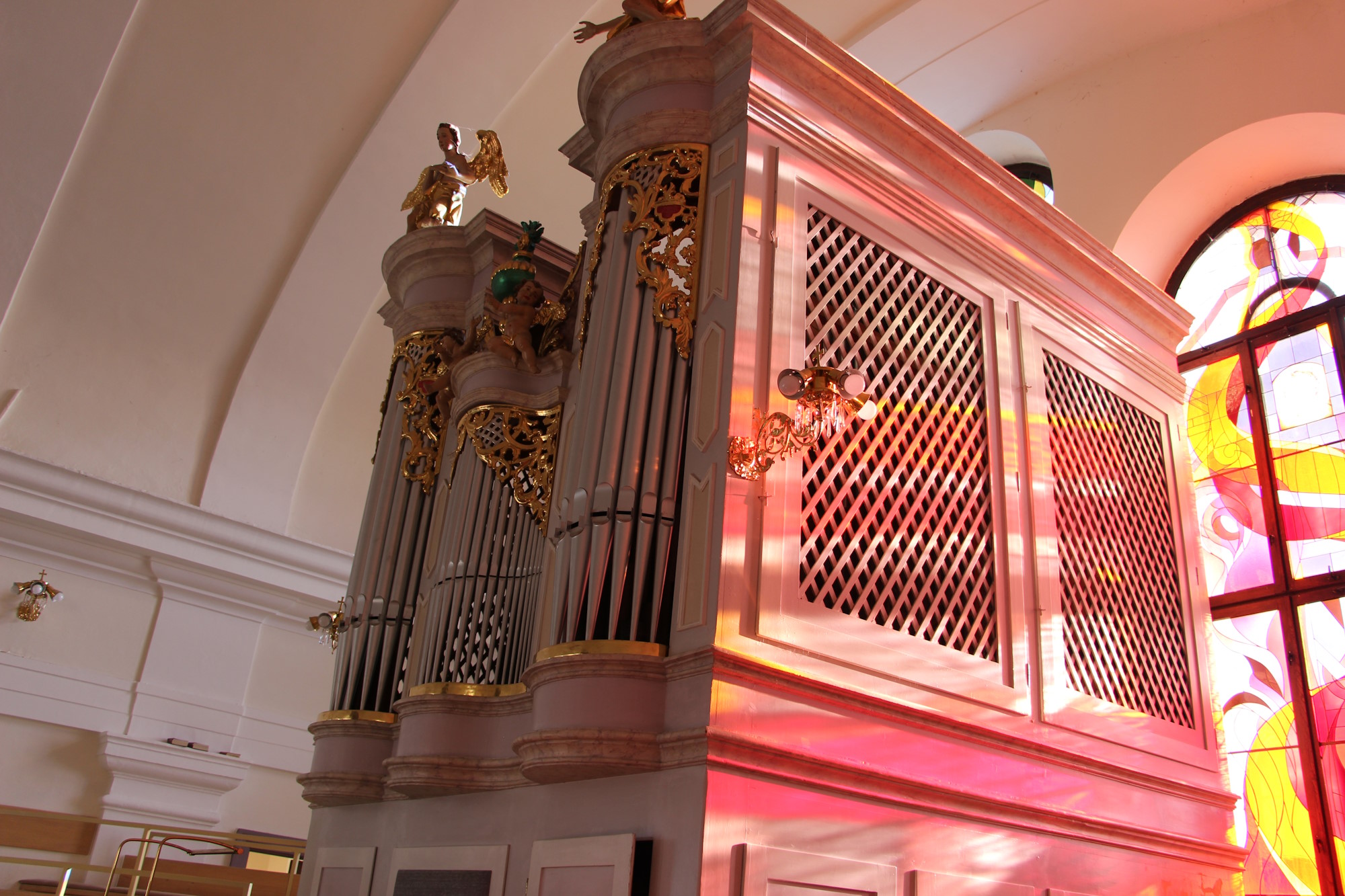
The organ in the Church of St. Martin in Moravče was mentioned in church records dating back to 1802. Unfortunately, we do not have much information about the instrument from that period. Only Stanko Premrl, in his handwritten Statistics of Organs in the Diocese of Ljubljana, provides the following note for the Moravče parish “»Malahovski – 1 – 12 a shortened pedal (C-F)”.
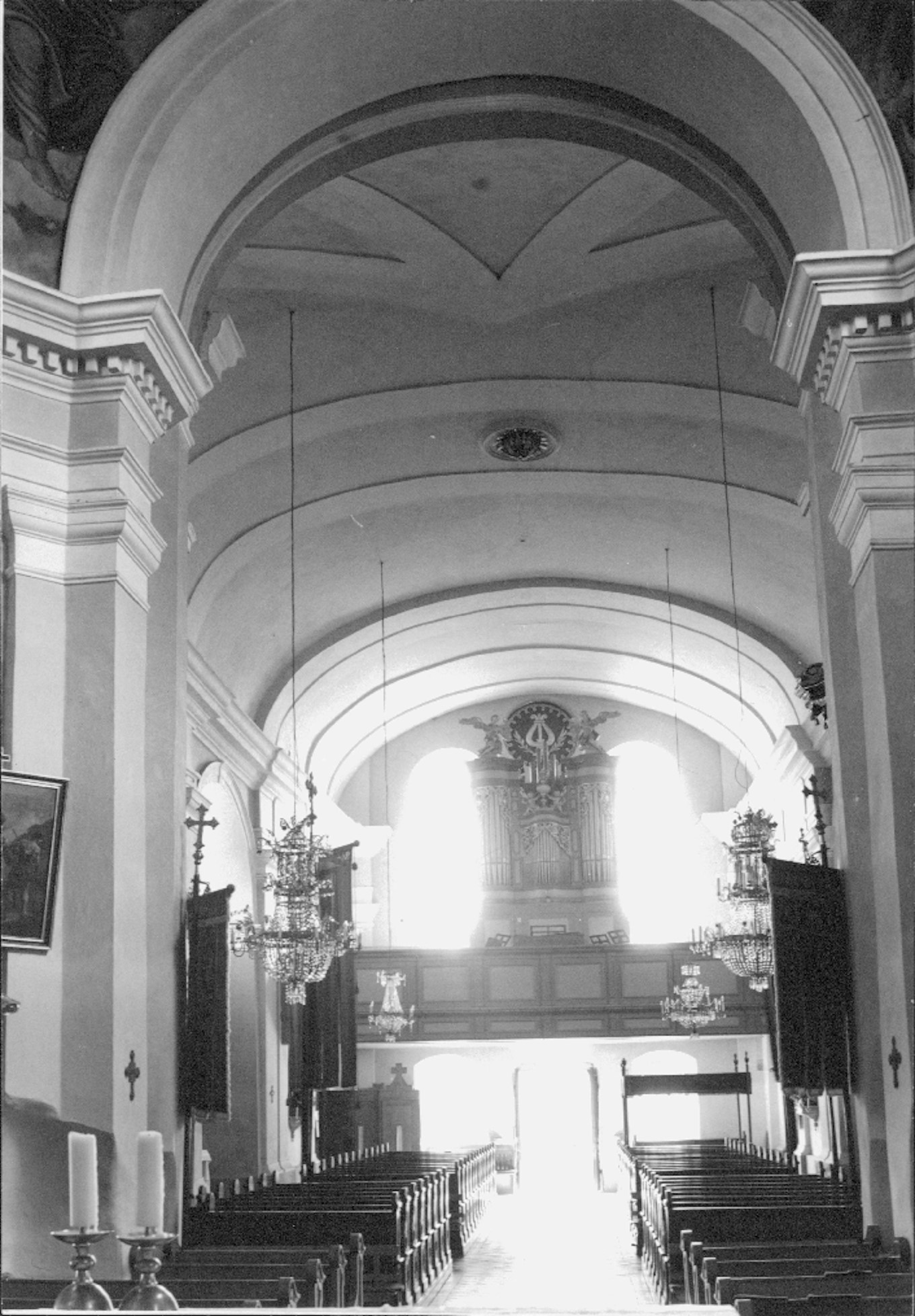
Photo: dr. Franc Stele
The current organ was built in 1964 as the 106th work of the organ master Franc Jenko (1894–1968) from Šentvid nad Ljubljano. He preserved the Baroque case from the previous organ and installed the new instrument inside it. This organ features 22 registers on two manuals and a pedalboard, as well as a pneumatic action.
In 2005, during a comprehensive renovation of the choir loft, the organ case was restored, and the prospect pipes were repainted. In 2014, the electrical installation was renovated. However, a complete renovation of the organ’s interior is still needed.

Photo: Organistica
What is the current condition of the organ, and which aspects need to be considered in its restoration?
In August 2024, the Moravče parish reached out to Organistica to evaluate the condition of Jenko’s organs located in the parish church. We conducted a detailed inspection in September 2024, followed by another assessment in June 2025. The expert examination revealed that the instrument was technically worn out and acoustically unbalanced. The potential restoration of the organ presents an opportunity to address these deficiencies.
Organ disposition >
Description of pipe registers >
Wind system
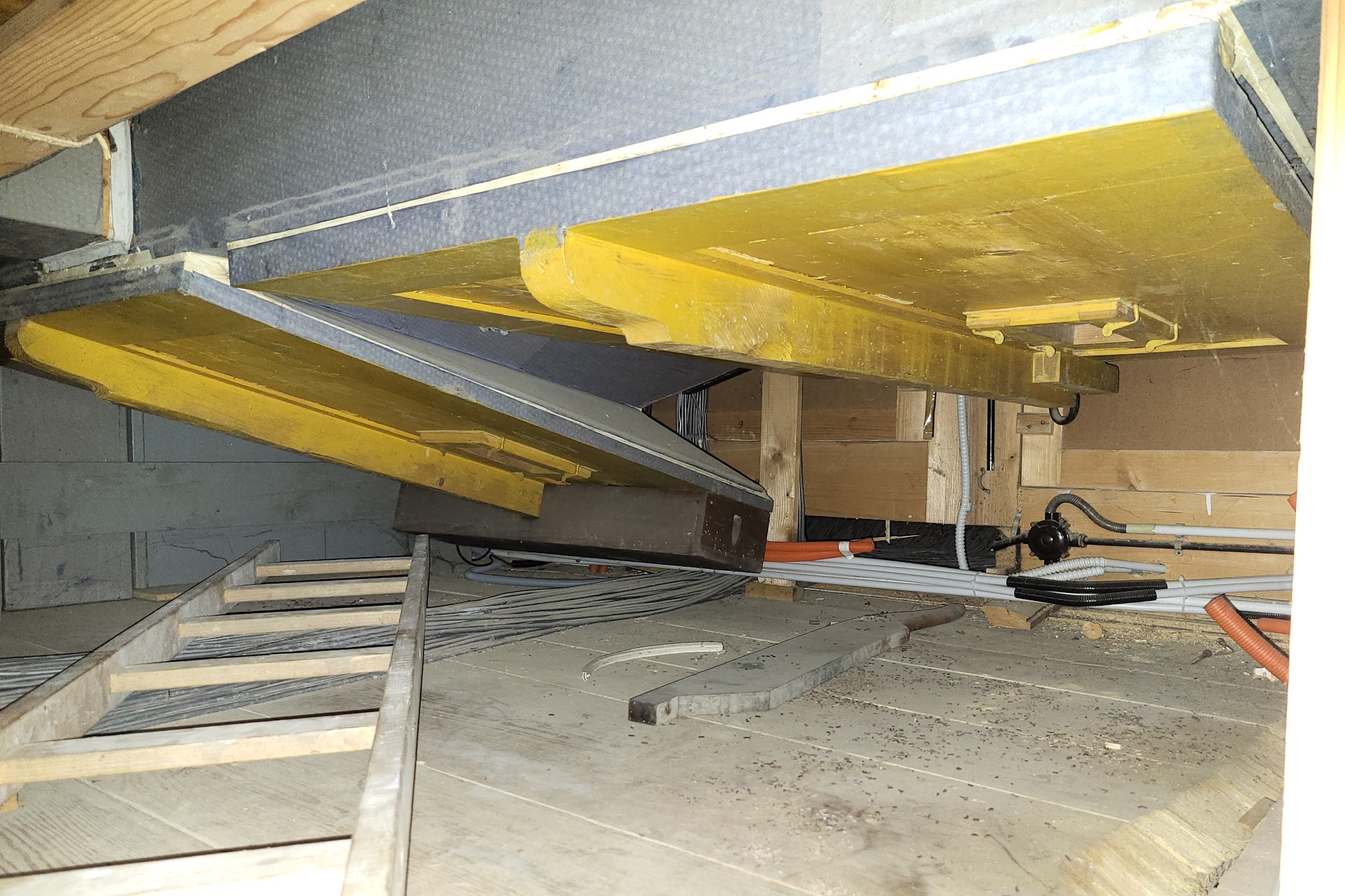
The main double bellows, measuring 2220 mm x 1270 mm (Δh =270 mm), and the electric blower are located in the front part of the organ case. The main double bellows supply the windchests or register supply channels of the manual and pedal pipes via four wind channels.
The electric blower needs to be cleaned and refurbished. A new solid wooden protection chamber with additional internal sound insulation should be constructed for the electric blower. Adequate air filtration must be provided at the inlet flap of the chamber. When positioning the electric blower at the bottom, a rubber pad (dampers) should be installed to minimize structural noise.
The air inlet to the main double rise bellows should be rearranged to reduce the audibility of air noise. An internal stop valve with a roller may be installed outside the main bellows to ensure effective damping.
All bellows in the organ should be opened, cleaned, and sealed. Depending on their condition, the worn leather (at the folds, especially on the inside) should be partially or completely replaced. Additionally, the blue paper on the outer visible surfaces of the bellows should be replaced.
The windchest supply channels should be cleaned and inspected. If necessary, they should be resealed, replaced, or reconstructed.
When reconstructing the brick weights on the bellows, they should be wrapped in suitable paper to prevent disintegration.
The tremulant needs to be repaired, as its operation causes the entire area around the organ console to shake.

Photo: Organistica
Pneumatics
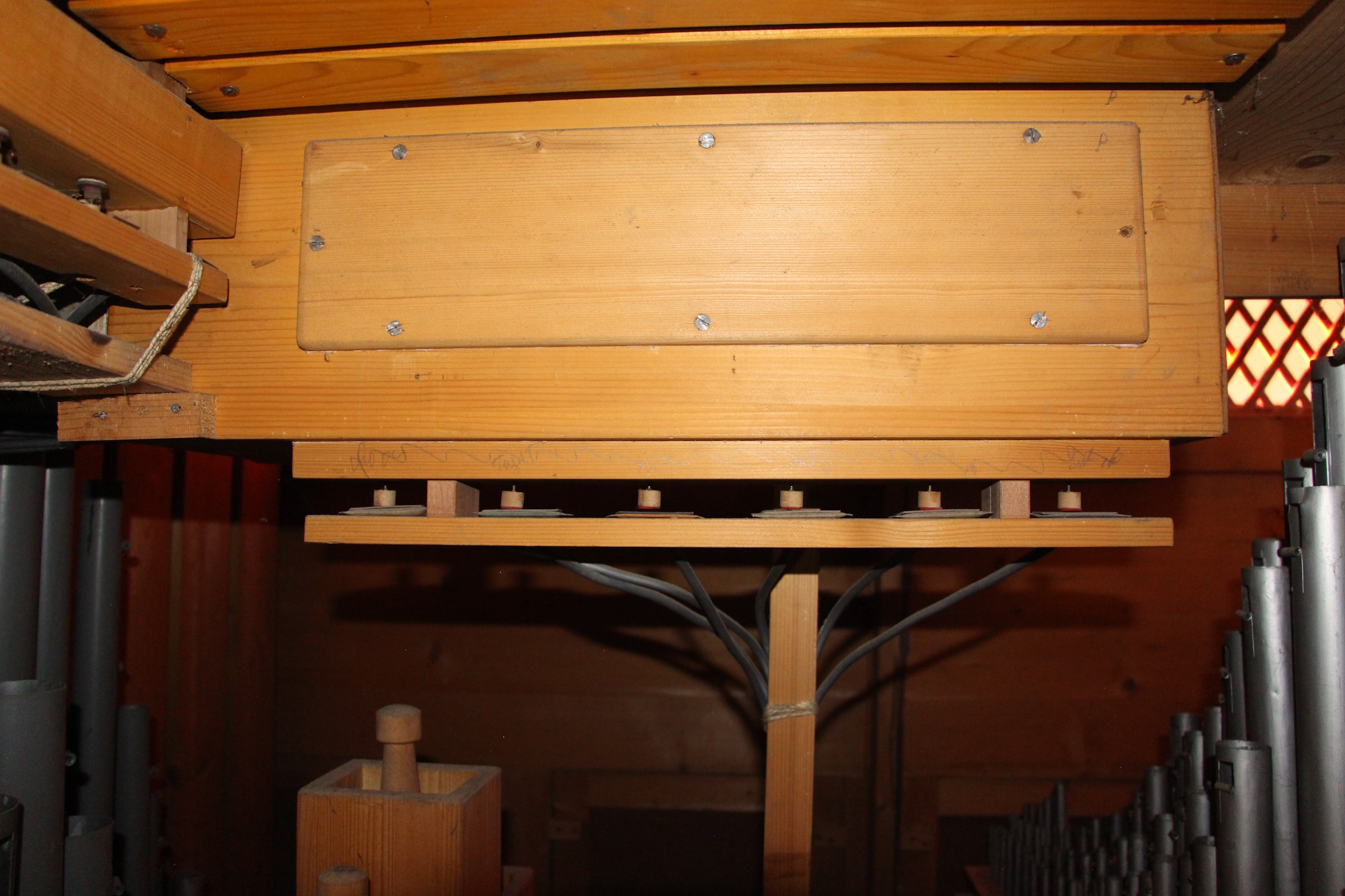
All worn and damaged pneumatic purses should be replaced. When ordering suitable pneumatic purses, it is important to pay close attention to the quality of the materials and workmanship. Additionally, the order should include extra stock for ongoing maintenance of the pneumatic purses.
For better accessibility and easier maintenance, it is advisable to reroute the pneumatic lead pipes during reassembly. While the lead pipes can be preserved to some extent, any worn or damaged pipes should be replaced with new ones or reconstructed.

Photo: Organistica
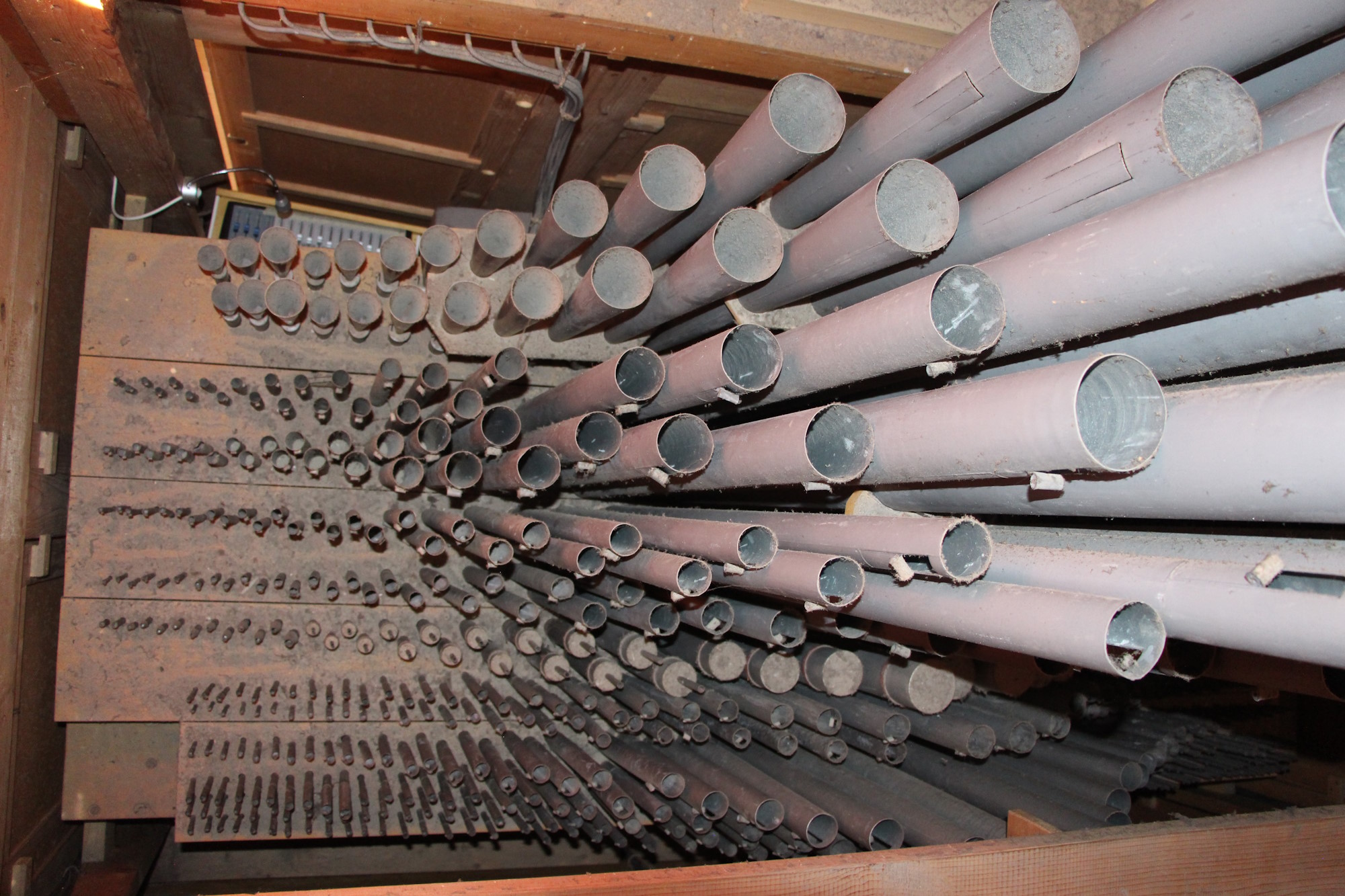
Windchests
If necessary, windchests should be carefully removed from the organ case and fully restored. This process must occur under suitable and stable climatic conditions, similar to those found in a church.
After dismantling the pipes, the pipe boards must also be taken apart and cleaned. They should be properly sealed and protected against wood-boring pests. Additionally, any cracks or damage to the stop chambers must be repaired appropriately.
Following the cleaning, the sealing on the cone valves should be inspected, and the leather replaced if necessary. The threads on the wires need to be cleaned, and all cone valves should be realigned.
Damaged support pipe rack should be rehabilitated properly and finished suitably, if agreed upon.
The register chambers and the undersides of the pipe boards should be checked for warping during disassembly, and any warped pipes must be straightened. All register valves should be renewed, and stiffened leather should be replaced.
During restoration, it is necessary to ensure adequate access to the entire pipe division and pay special attention to the supporting structure of the windchests.
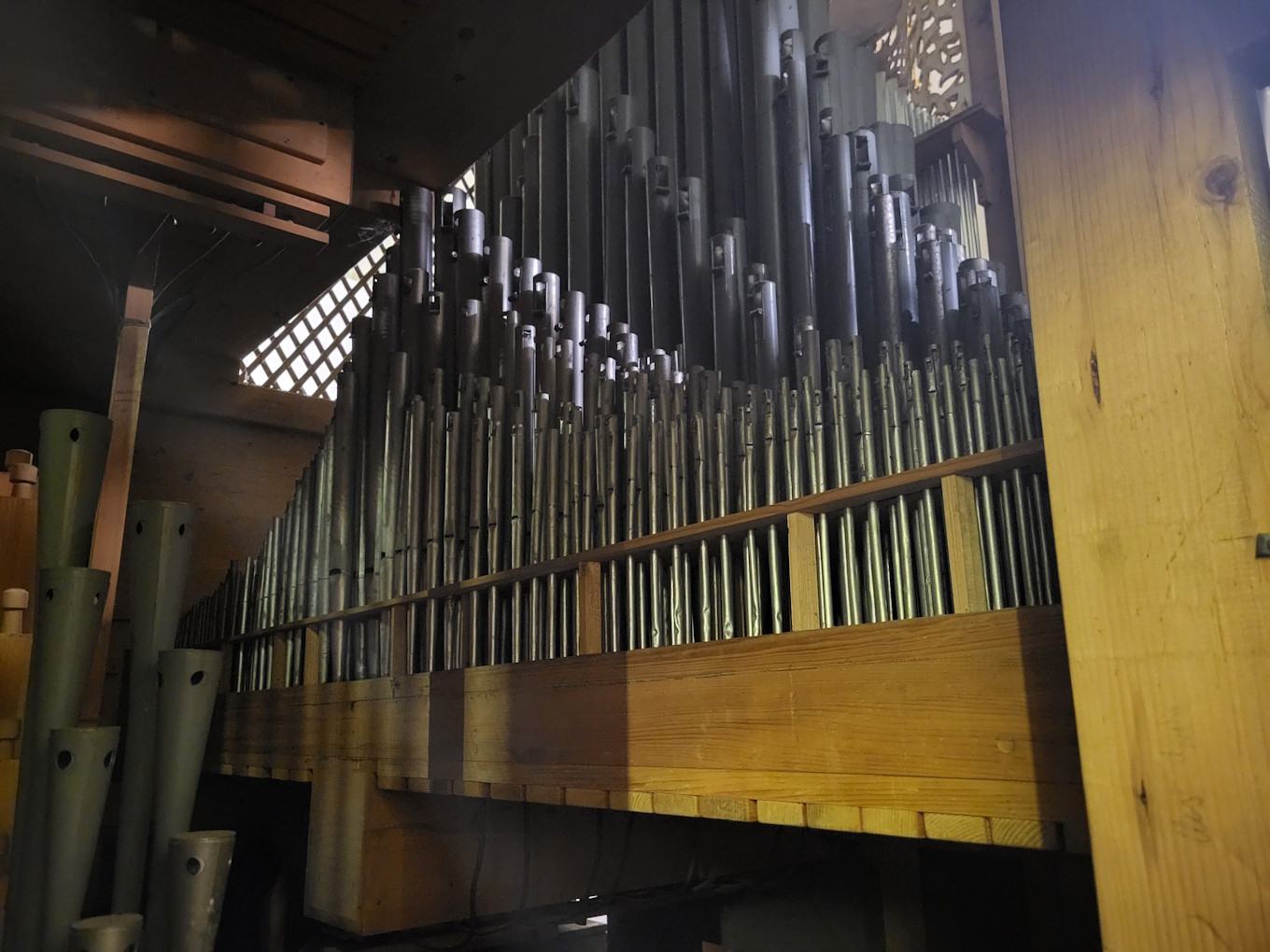
Photo: Organistica
Pipes
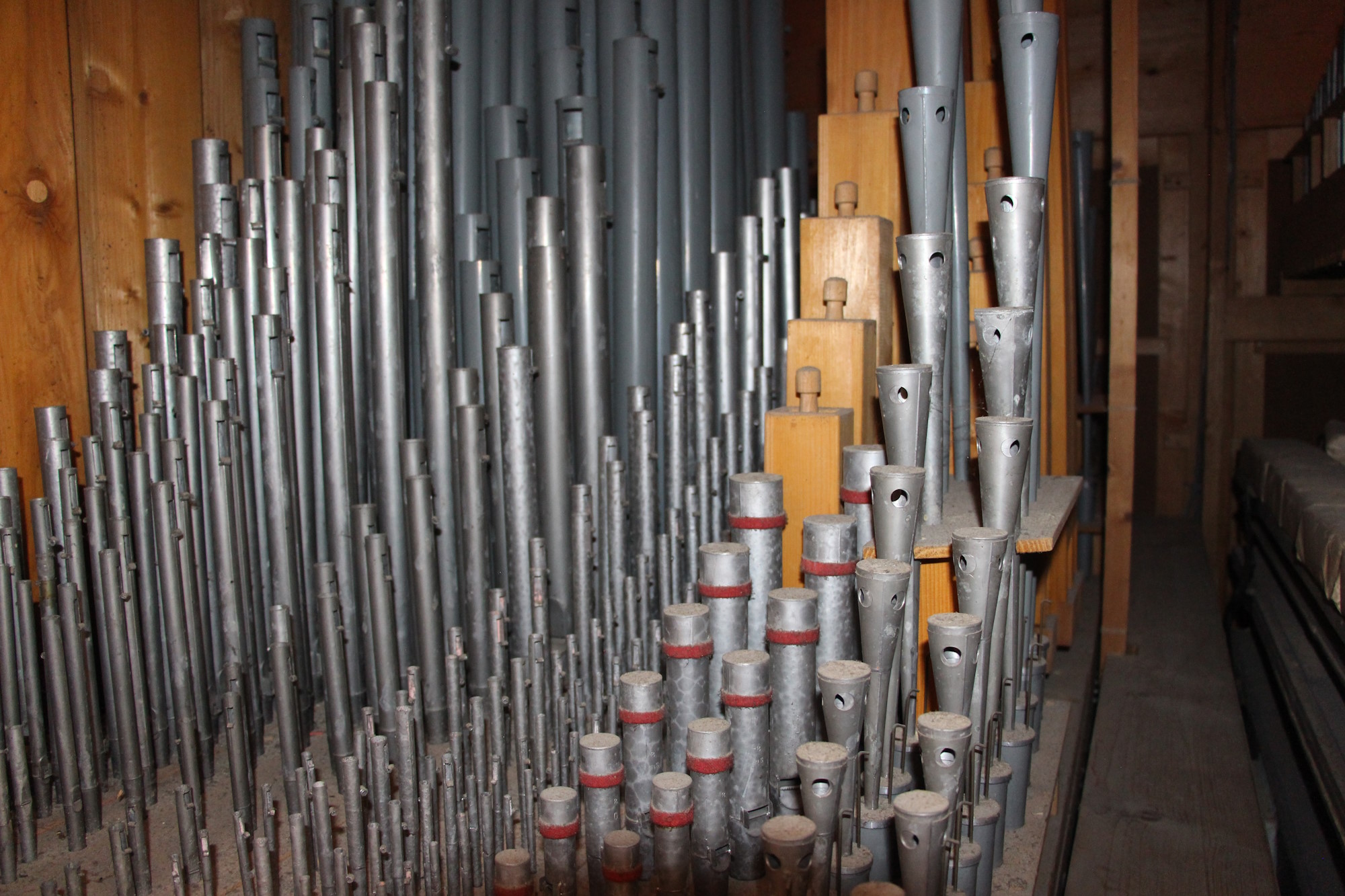
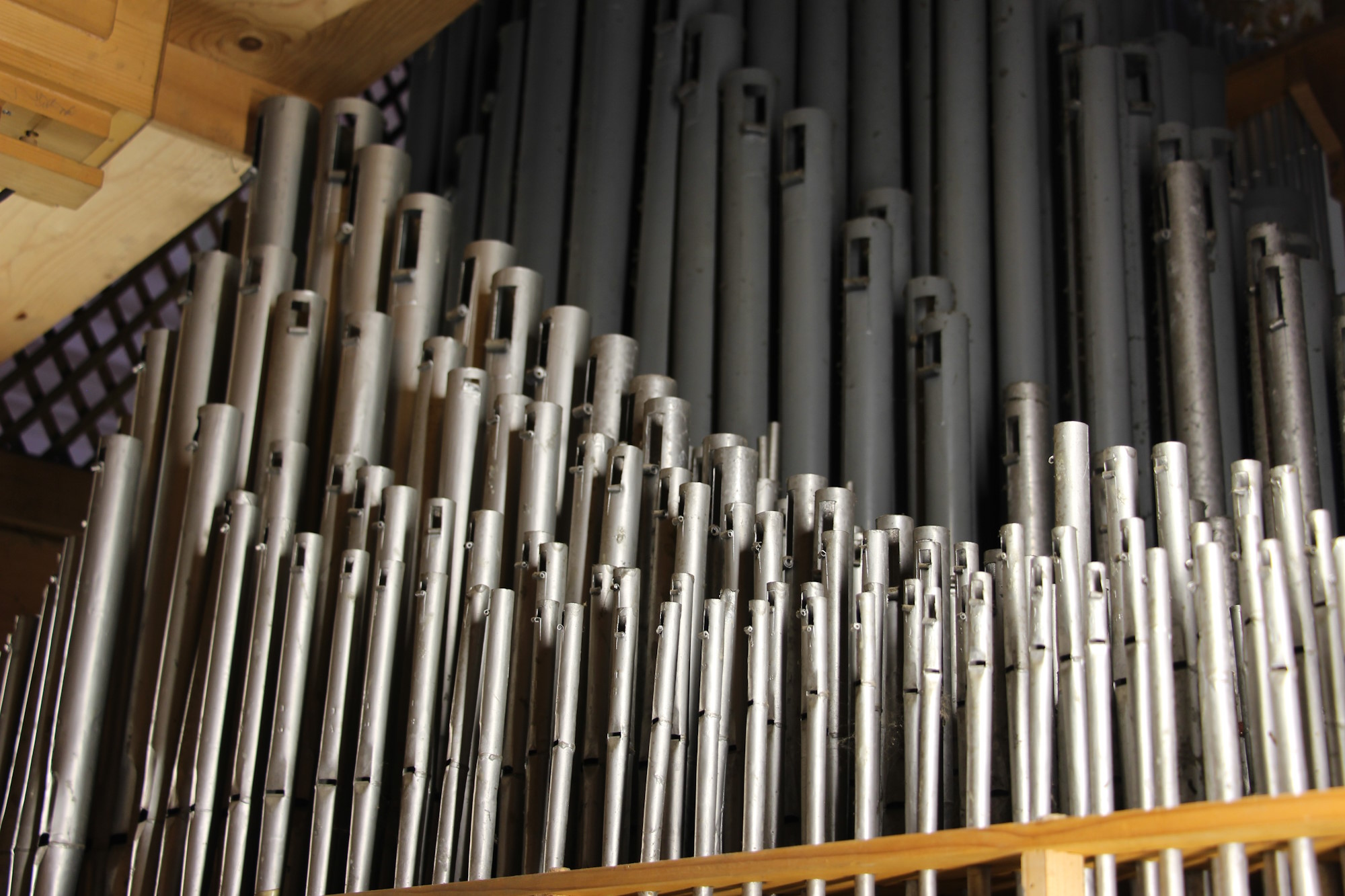
All pipes must be dismantled, cleaned, and restored according to established procedures.
Metal pipes must be straightened and repaired. Their feet, which may have collapsed under weight, need to be reinforced, and any damaged edges (regulating slots) should be soldered. Some metal pipes have been improperly replaced with pipes of incorrect dimensions during previous repairs. This includes replacements without regulating slots, conical pipes replaced by cylindrical pipes, and pipes with incorrect foot heights. These should be replaced with accurate replicas.
Pipes on the façade should be polished to restore their original gloss, either by hand or using machinery, following an agreed-upon procedure.
All cracks and loose glued joints in the wooden pipes must be repaired. Any wormholes that have developed should also be addressed with appropriate treatments. All tabs should be unscrewed and slots levelled. Rusted bolts need to be polished, while damaged bolts must be replaced. On covered pipes, the covers should be restored and adjusted, and the stiffened leather must be replaced (modifying the felt seal). Damaged handles on the covers that lack strength due to wormholes must be replaced with new replicas. Similarly, worn-out wormholes on the pipe legs should be replaced with replicas, and any wormholes present must also be addressed accordingly.
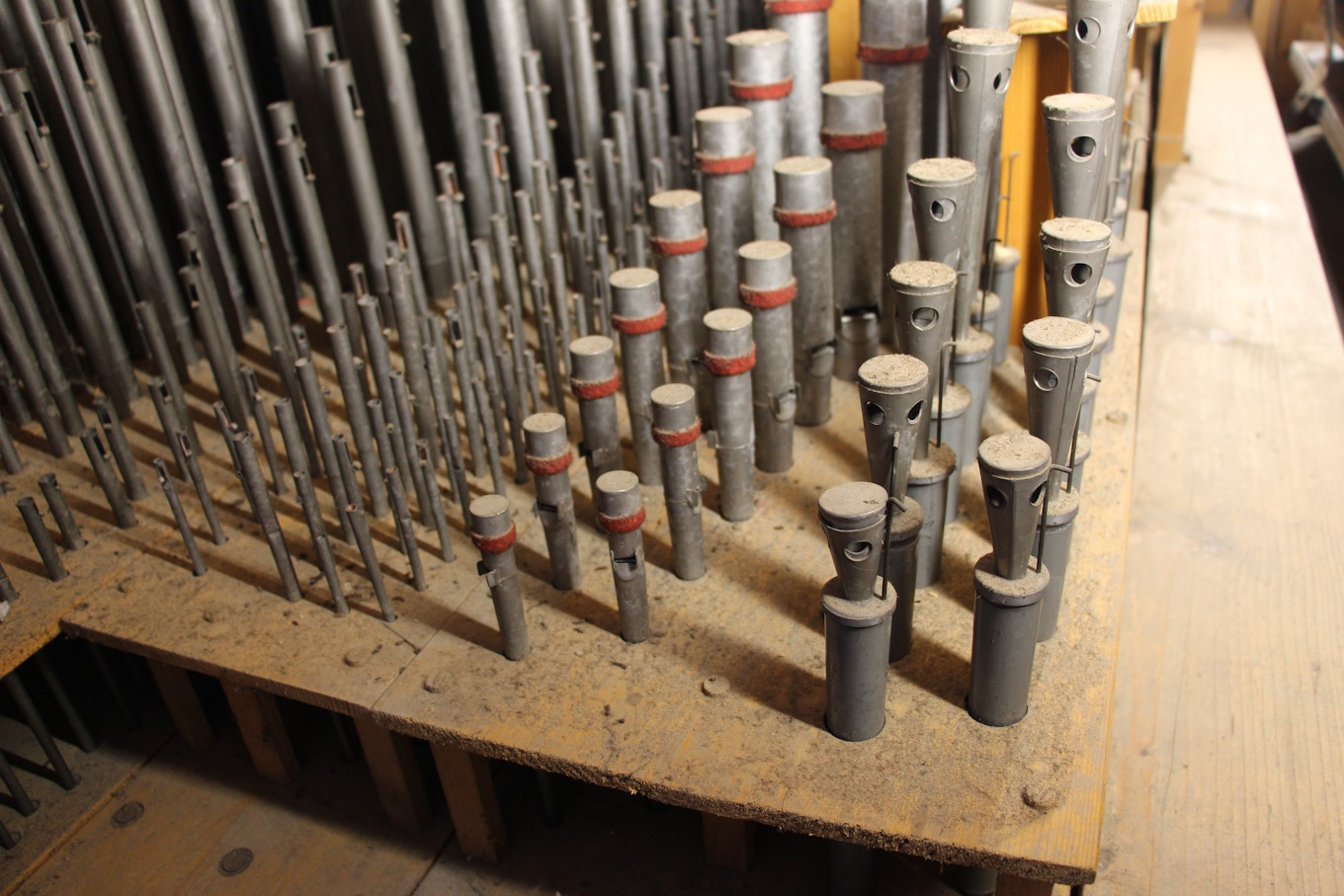
Photo: Organistica
Voicing
We assume that the organ was revoiced in the past.
I. manual
- When using the Super I coupler, the intonation is relatively appropriate, but without it, the intonation is inappropriate. The fact is that the aliquotes are too quiet.
- The 4′ Octave is dynamically insufficient in the two-part octave (question of suitability). The register is generally insufficient in relation to the proportions of the instrument.
- The Octave or Quint 2 2/3′ functions as a “Nazard quint,” but there is a question of its role; for example, there is significantly insufficient connection between the Mixtura and the other registers.
- Tercian II 1 3/5′ has no character/role (especially discant). In this situation, it is mainly the bass register. What is its role?
- Mixture III 2′ is fine, but it is not properly prepared/supported by aliquot tones.
- The Trumpet 8′ has many “slow tones.” It is necessary to bend the reeds appropriately. It is also necessary to generally balance the reeds.
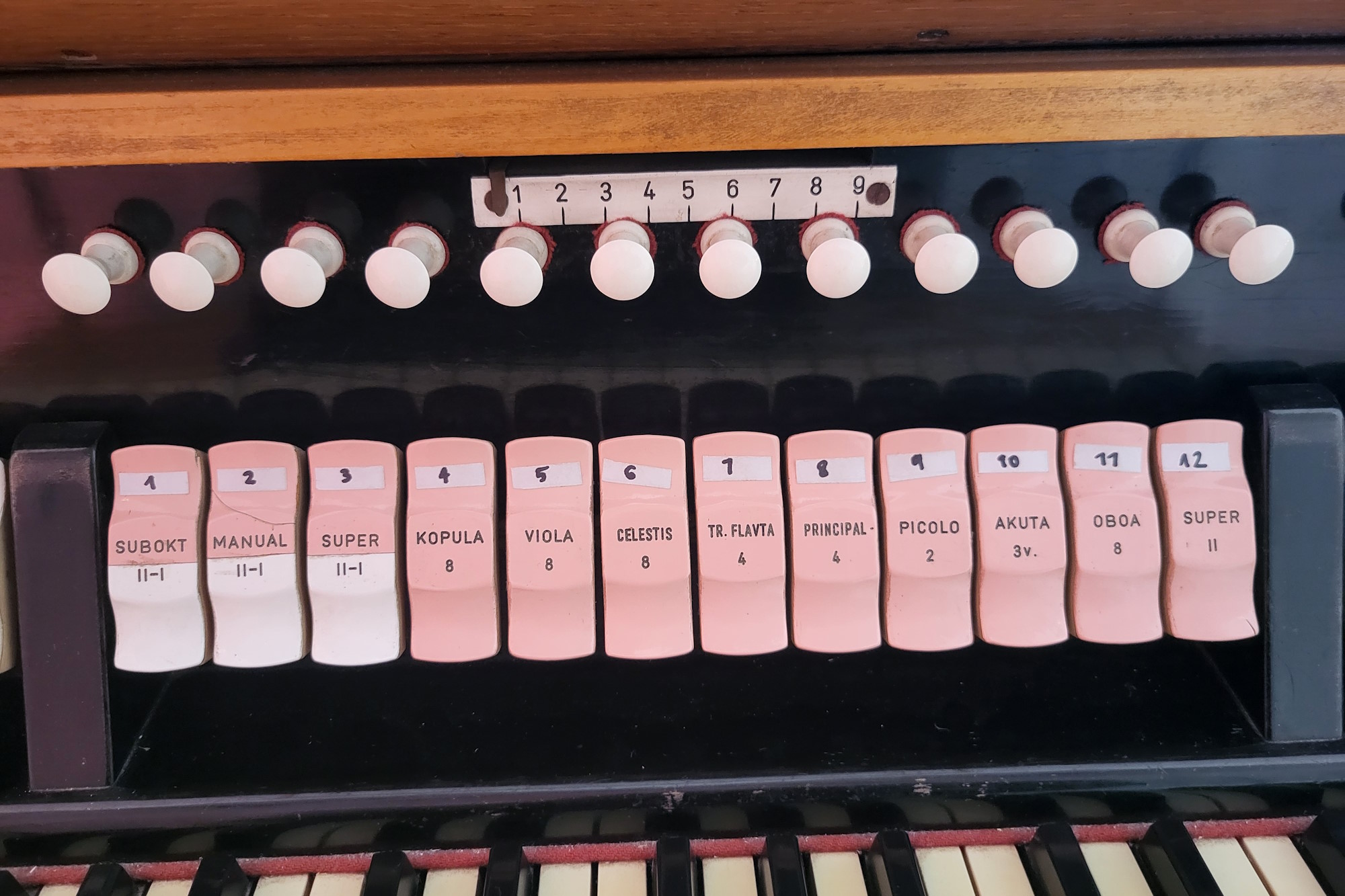
II. manual
- What is the so-called positive in the organ, in terms of the ratio. The main manual?
- Flavta 8′ (I. manual) = Kopula 8′ (II. manual)
- Dulcian 8′ (I. manual) = Viola 8′ (II. manual)
- The basic 8′ registers do not have characters or structure of aliquotes.
- Celestis 8′ II is balanced or tuned, why?
- The Flauto traverso 4′ is quite good.
- Principal 4′ is dynamically too quiet in relation to the others and also lacks character.
- Picolo 2′ does not have the appropriate character, especially in the discant (except for the three crossed octave).
- Akuta III 1 1/3′ does not fit into the given sound structure. It is controversial because in the current sound structure, the organ does not have (Principal 4′) a corresponding 4′ sound connection or sound bridge.
- The Oboa 8′ needs to be voiced properly. The tones are harsh (especially in the bass register).
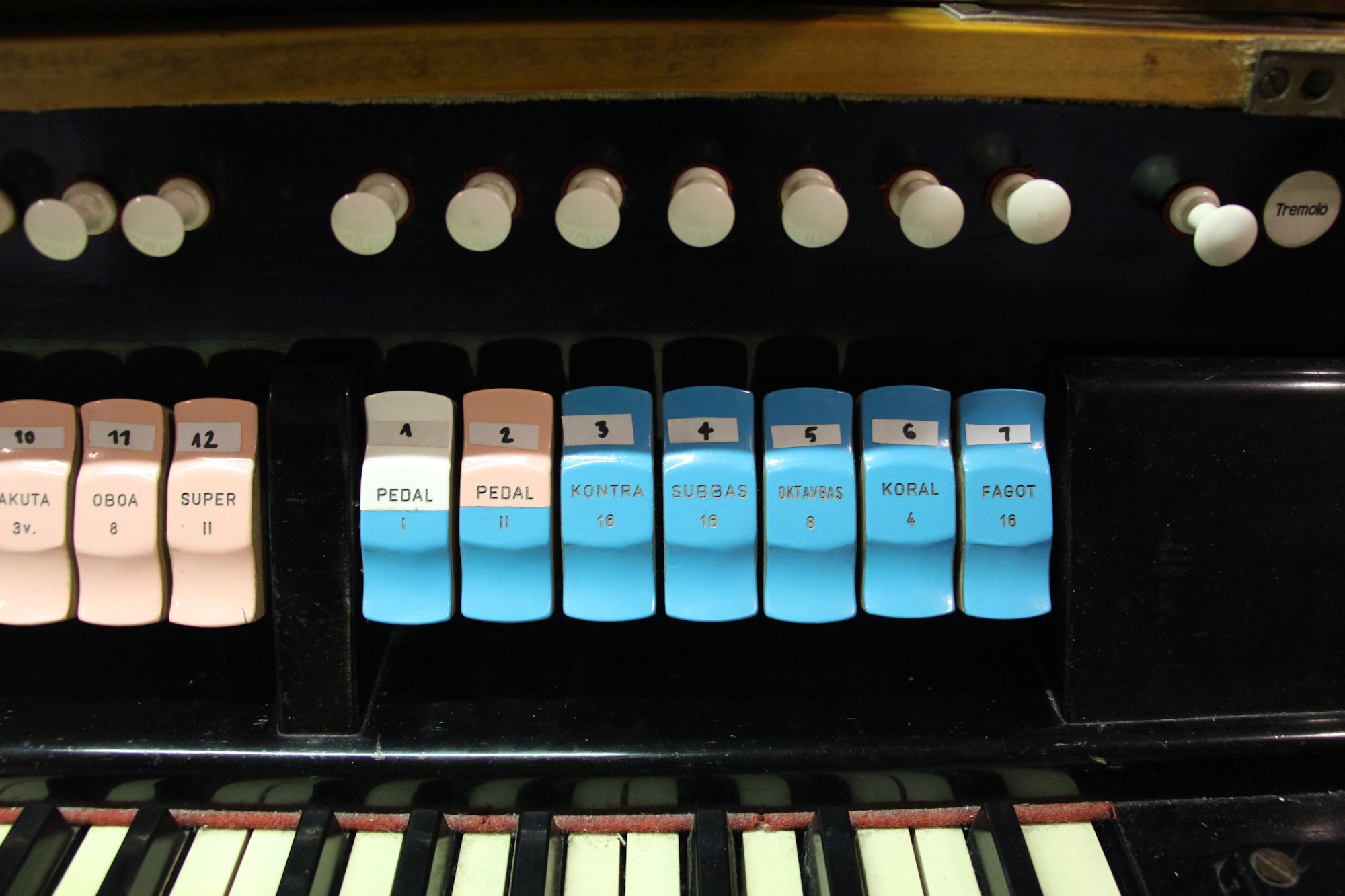
Pedal
- The Kontrabas 16′ has a slow attack.
- Subbas 16′ – some tones are unstable and slow. The large C pipe needs to be checked (broken pipe?).
- Octavbas 8′ – attack!
- Koral 4′, like the 4′ pedal register, does not perform its function (dynamics?). However, when used, it adds something to the sound of the pedal and brings it out.
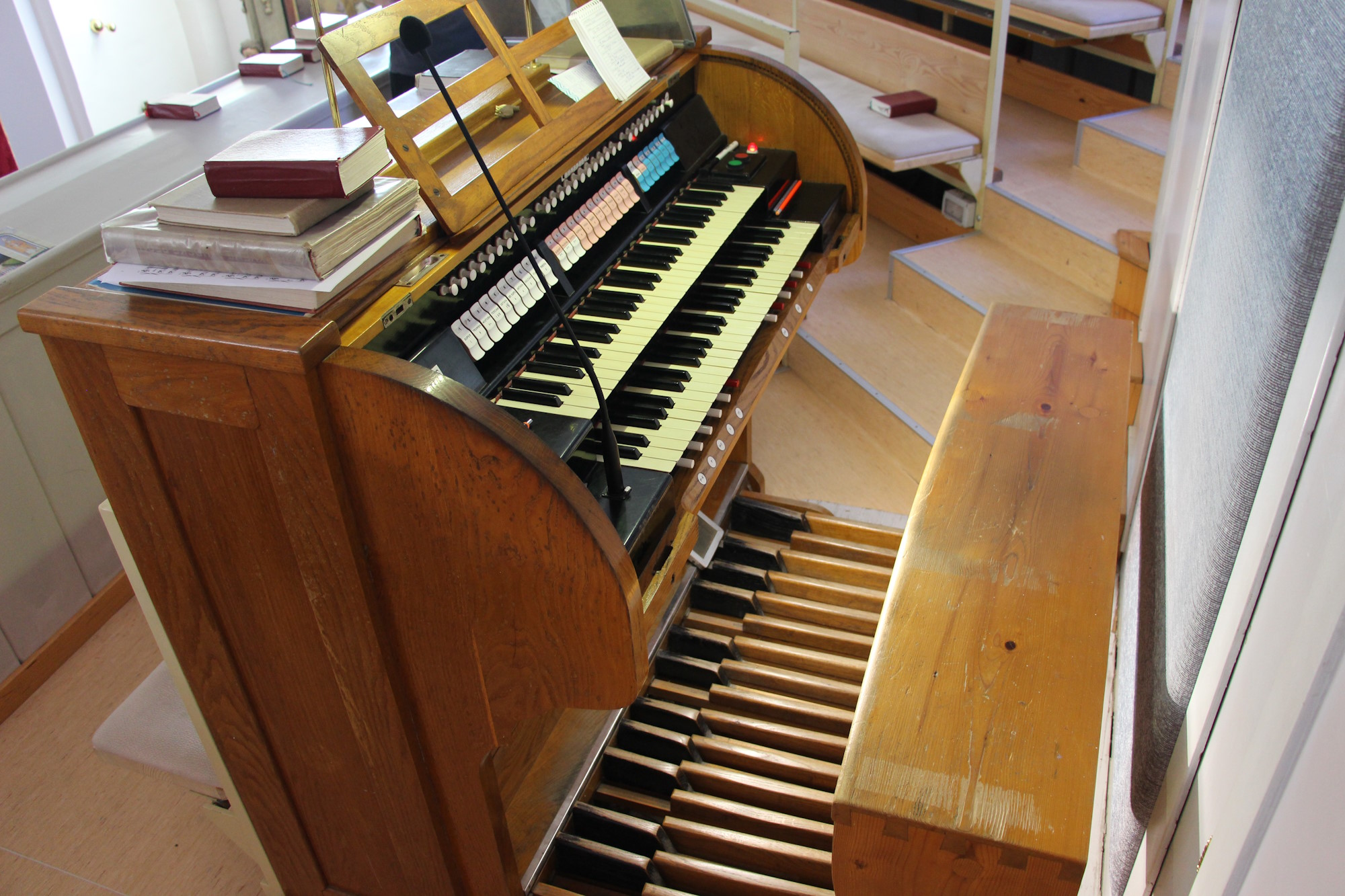
Organ console
The organ console is positioned in front of the organ, allowing the organist to face the altar. The tilting register switches are located to the left and right of the manual keyboards.
During the renovation, any inadequate electrification in the console’s case should be removed. Additionally, “permanent guests” of the organ console should be installed, which include a system for projecting songs, communication with the sacristy, an audio system for the organist, and a camera for monitoring liturgies or concerts.
All components inside the console must be cleaned. This includes the wires and their threads, which should be replaced or reconstructed as necessary for reliable operation and ease of maintenance (regulation).
The pedal light should be replaced with a new one, and the electrical installation inside the console must be properly organized. A suitable solution for the lighting of the music desk needs to be agreed upon. The location and type of the old or new organ switch should also be discussed.
We recommend making a copy of the original bench with an adjustable mechanism, similar to the one in the Ursuline Church in Ljubljana.
Unoriginal or later-added inscription plates should be replaced with replicas of the originals. The labels with register numbers that are stuck above the original inscription plates on the console must be removed. A removable numbering system for the tilt register switches should be arranged.
Manual keyboards: 56 tones, C-g3
The white covering on the keys of manual keyboards must be cleaned. If any coverings are badly damaged, they should be replaced with new ones after prior consultation. Worn leather in the guide grooves should be replaced, and the guide pins should be cleaned. All keys must be re-polished. Worn felt on the frames should be replaced, and the keyboards must be adjusted. The backing strips at the rear of the keyboards, where the keys rest, should be flattened and stiffened.
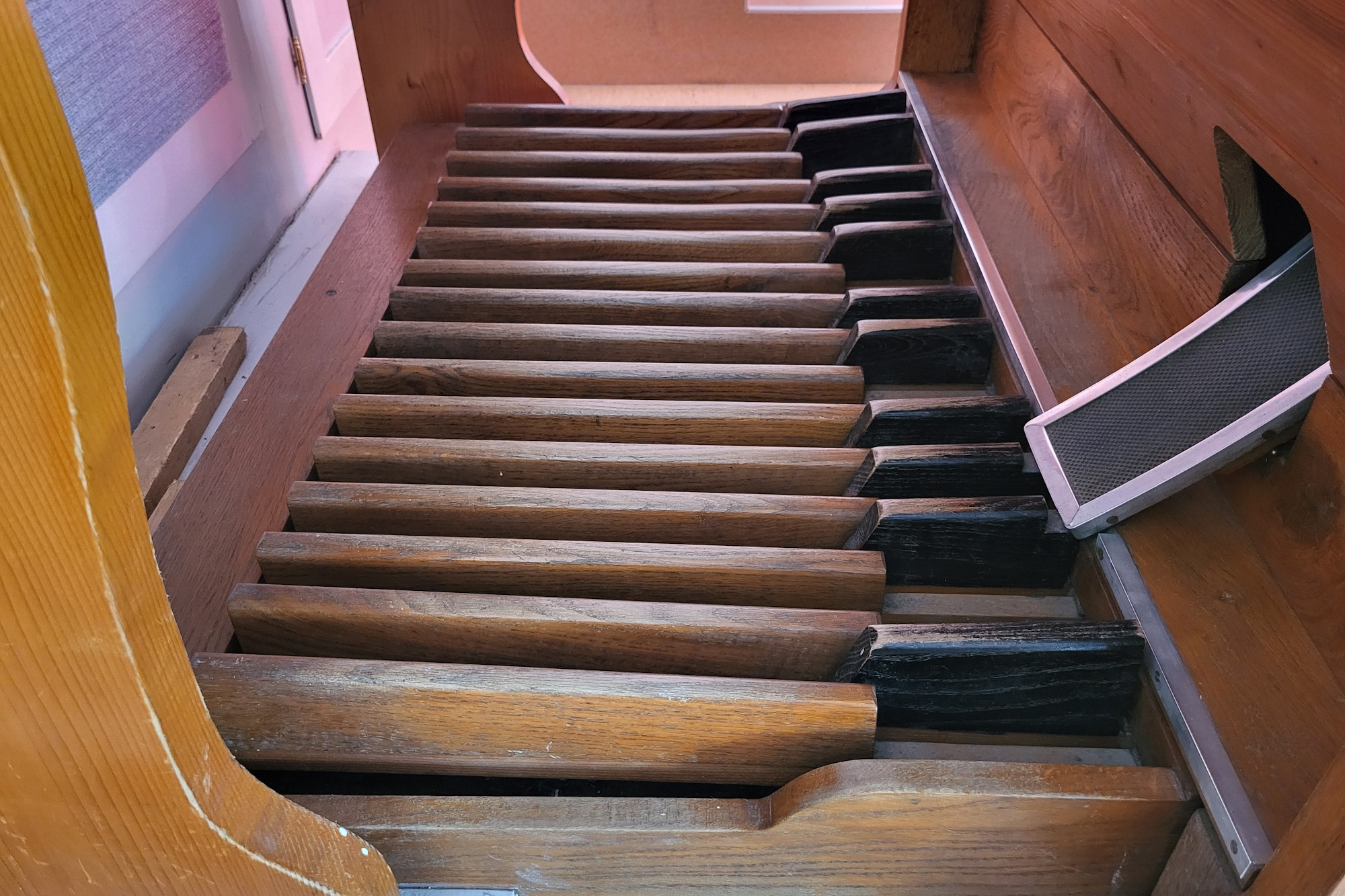
Pedal keyboard: 27 tones, C-d1
The pedal keyboard needs to be cleaned, the felt and leather in the guides replaced. If necessary, the springs and the keyboard should be rebalanced. Pedals that are worm-eaten or badly damaged shall be replaced with new ones. To protect the pedals from dirt, they shall be coated with a resistant oil or a suitable product.
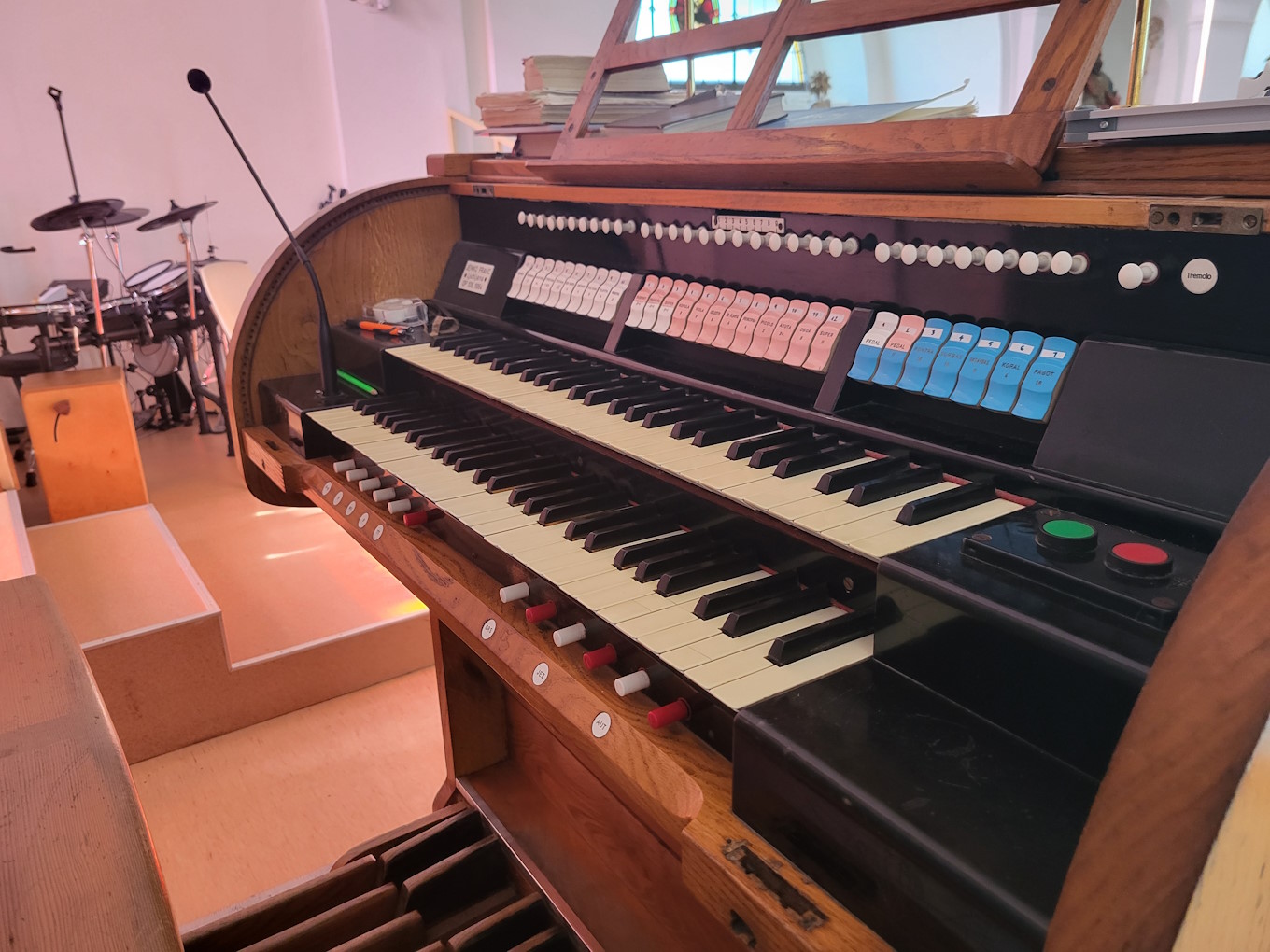
Photo: Organistica
Organ case
For the organ cases restoration, it is essential to obtain the opinion of the Institute for the Protection of Cultural Heritage of Slovenia (IPCHS).
All load-bearing structures should be checked for strength and proper orientation of the timber grain in the beams. When rebuilding, doors that open with an organ lock or hinge, should be arranged correctly.
Inadequate electrification of organ case must be removed, and then appropriate interior and exterior lighting should be installed.
The organ cases also exhibit damage to the exterior paint and the carved decorations. This damage should be reconstructed during the restoration process.
The organ case must be thoroughly cleaned both inside and out.
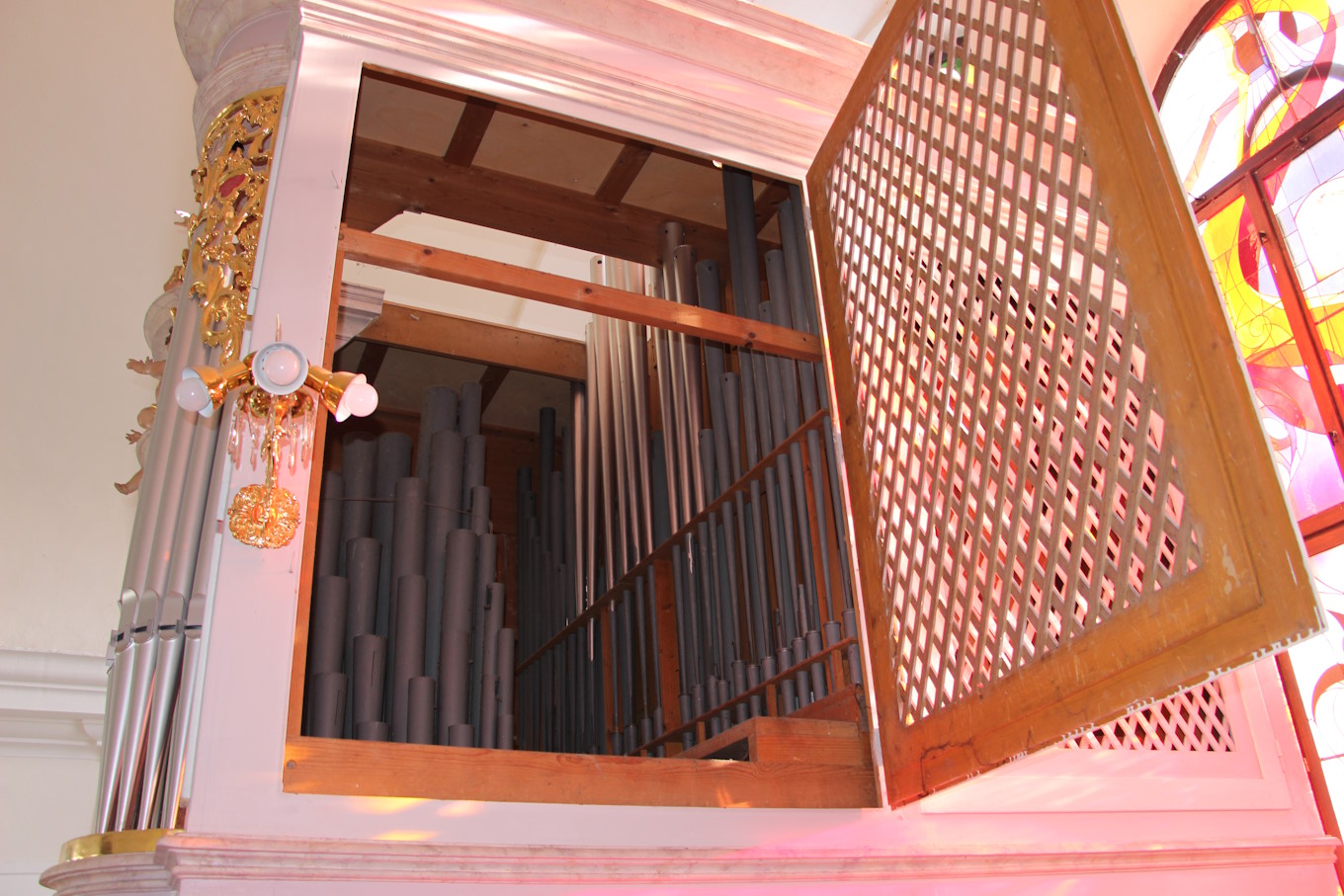
Photo: Organistica